


Pantheon: Fast Track Ticket
Pantheon - Rome's Ancient Wonder!
- Pantheon: Skip The Line Entry Ticket


Pantheon Rome Tickets - Skip-the-line Entry, Prices and Visitor Information
Rome Pantheon - Quick Information
- Pantheon Address: Piazza della Rotonda, 00186, Roma, RM, Italy.
- Opening Hours: Monday - Friday: 10:00 - 17:00. Saturday: 10:00 - 15:00. Sunday: 12:00 - 17:00
- Tickets Required: Yes
- Recommended visit time: 1-2 hours
- Best option: Skip-the-line entry ticket with audio guide
What is the Pantheon in Rome?
- The Pantheon is one of the best-preserved ancient Roman buildings and one of the most visited attractions in the city.
- With millions of visitors each year, queues can build quickly, especially during peak season.
- Booking Pantheon tickets in advance is the easiest way to skip the line and guarantee entry at your preferred time.
- Inside, you’ll discover the world-famous dome with its open oculus, stunning marble interiors, and nearly 2,000 years of history.
In this guide, you’ll find everything you need to plan your visit, including ticket options, prices, skip-the-line entry, and helpful tips.
What to See Inside Pantheon Rome
The Pantheon is not just a monument, it’s a masterpiece of ancient engineering.
Highlights include:
- The massive dome, still the largest unreinforced concrete dome in the world
- The oculus, a circular opening that lights the entire interior
- The marble floors and Corinthian columns
- The tomb of Renaissance artist Raphael
- Stunning symmetry and architectural perfection
Best Time to Visit the Pantheon
The best time to visit the Pantheon is early in the morning or late in the afternoon.
- Morning (09:00–10:30): Quietest time with fewer crowds
- Late afternoon: Softer lighting and calmer atmosphere
- Avoid Midday: Usually the busiest time of day
Visiting early also gives you better photos and a more peaceful experience inside.
Why Book Pantheon Tickets Online?
Booking online in advance is the easiest way to secure your preferred entry time and avoid long queues at the entrance.
Benefits include:
- Skip-the-line access
- Guaranteed entry times
- Mobile ticket convenience
- Faster admission
- Better availability during peak season
Booking in advance is highly recommended during weekends and peak travel seasons when Pantheon entry queues can become very long.
{{ticket-block-triple}}
Why the Pantheon Is One of Rome’s Most Famous Landmarks
The Pantheon is an architectural masterpiece in the heart of the eternal city. Its iconic façade and dome are recognised worldwide and it still serves as both a place of worship and a symbol of Roman architectural innovation.
The name "Pantheon" comes from the Greek words "pan," meaning 'all,' and "theos," meaning 'god,' reflecting its original purpose as a temple dedicated to all Roman gods.
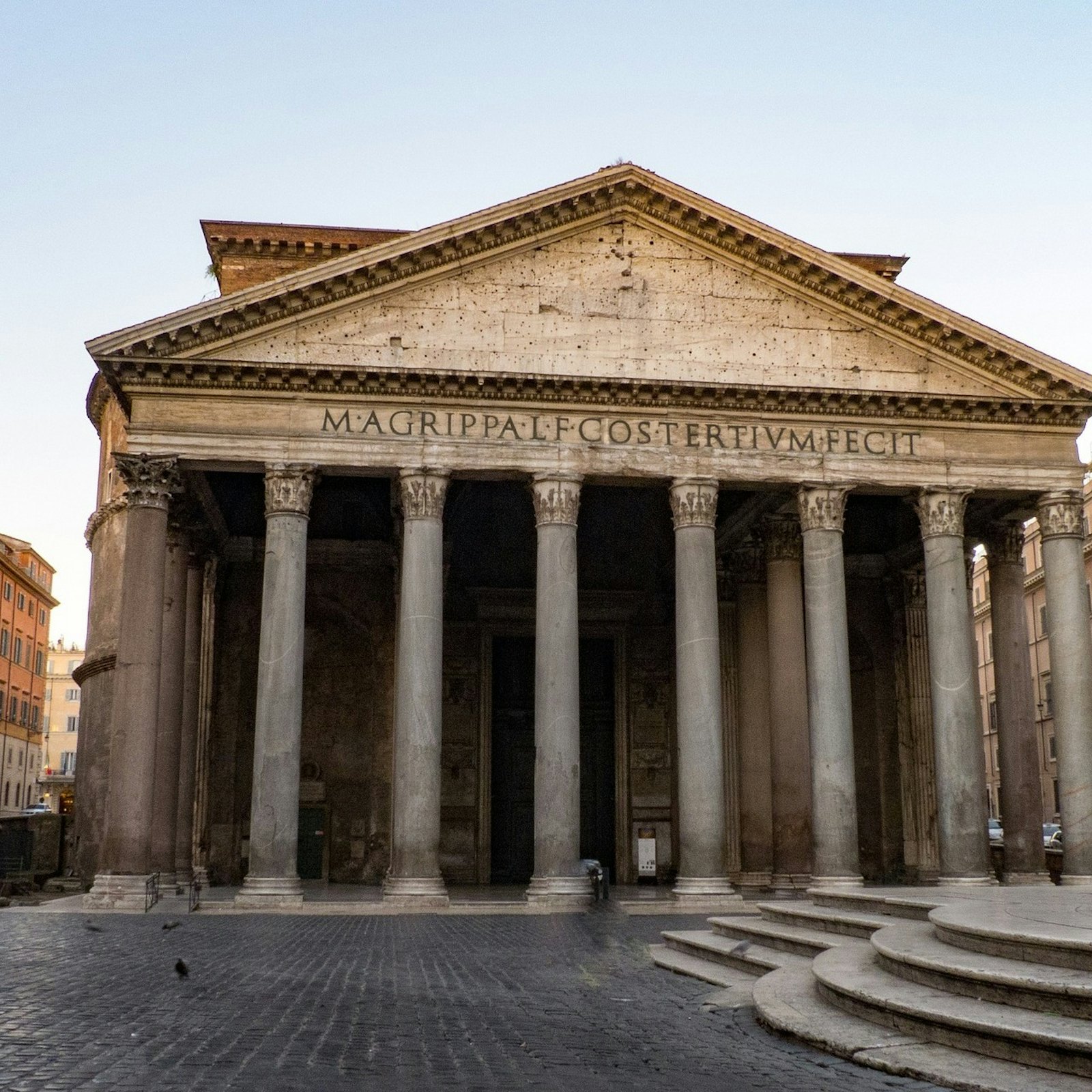
Historical records indicate the original building was constructed between 27 BCE and 14 CE. It was commissioned by Marcus Agrippa, an architect and son-in-law of Emperor Augustus.
The Pantheon was rebuilt after a fire around 80 CE.
The Pantheon survived the advent of Christianity. In 608 AD, Emperor Phocas gifted the building to Pope Boniface IV, who transformed it into a church, and then dedicated it to St. Mary and the Martyrs in the 7th century.
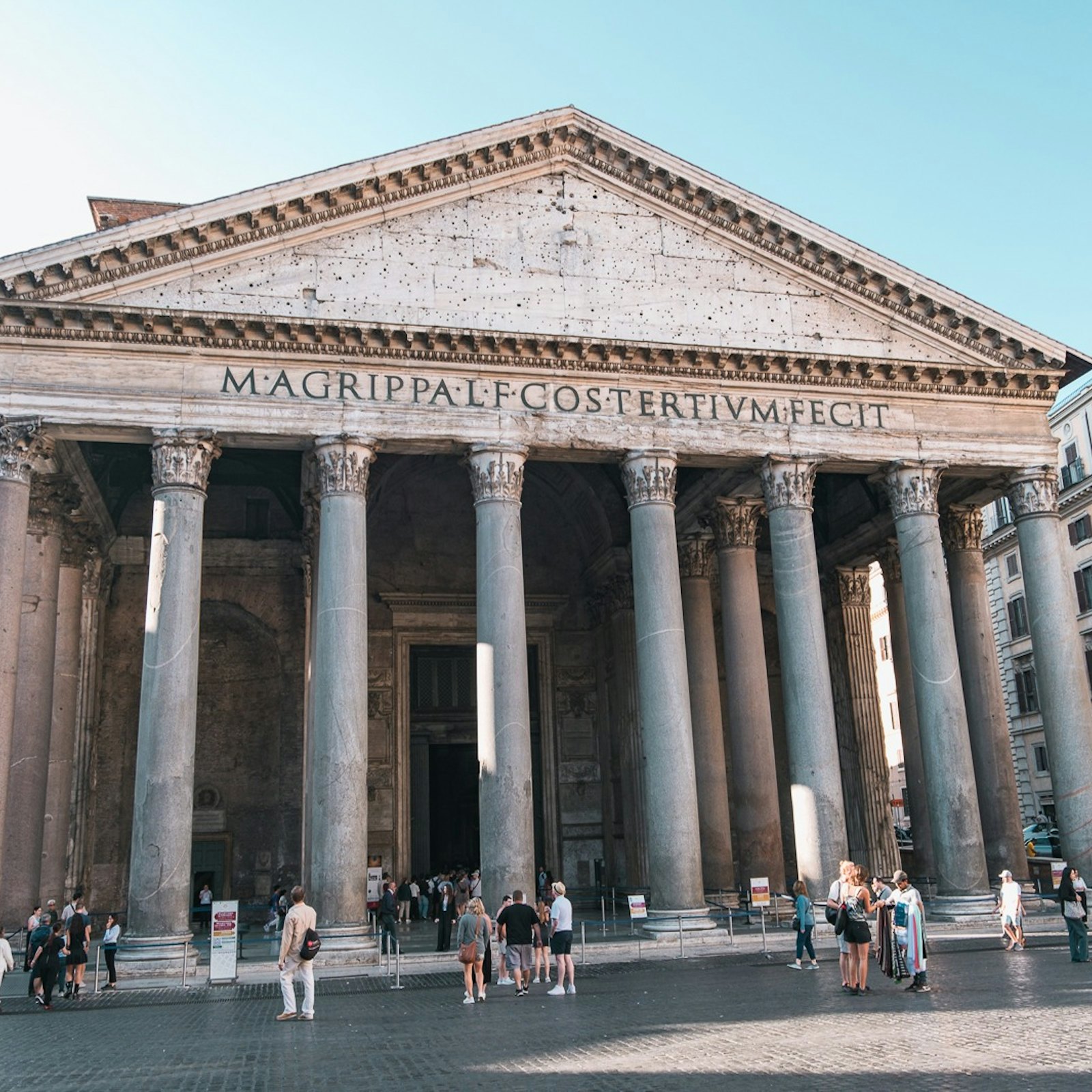
It has 16 massive granite columns at the entrance which make the building instantly recognisable.
Its dome has a diameter of 43.3 metres and the 'oculus' is the 8.2-meter-wide opening at the top of the dome that provides natural light throughout the day. Rain can enter through the oculus, and hidden drainage holes in the floor help channel water away.
Inside, visitors are greeted by a vast space with Corinthian columns, niches, and a collection of art.
The Pantheon houses the tombs of several notable figures, including the renowned Renaissance artist Raphael and several Italian kings, adding to its historical significance.
The main altar, which is located directly beneath the oculus, is a focal point and is covered with religious iconography. The oculus casts dramatic beams of light throughout the day, demonstrating the advanced engineering and astronomical knowledge of the ancient Romans.
The Pantheon's design has influenced countless architects throughout history. Its dome has inspired structures such as the Florence Cathedral and St. Peter's Basilica.
The Pantheon is one of Rome’s must-see landmarks, offering a unique blend of history, architecture, and atmosphere.
Booking your Pantheon Rome tickets online is the easiest way to ensure a smooth visit, avoid queues, and make the most of your time in the city.
Popular Tickets
Popular Attractions
Pantheon Rome FAQs
- Is the Pantheon in Rome free to enter?
- The Pantheon in Rome used to be free to enter, yes. However, since 2023, it is no longer free for tourists. You must now purchase a ticket.
- How long does it take to visit the Rome Pantheon?
- Most visitors spend anything from 30-minutes to 2 hours inside.
- Do you need a ticket to visit the Rome Pantheon?
- Yes, Rome Pantheon now rquires a ticket to enter.
- Is the Pantheon Rome worth visiting?
- In our opinion, yes, definitely, especially if you are an architecture fan.
- Does it rain inside the Pantheon Rome because of the hole in the roof?
- It does rain in the Pantheon, yes! The hole in the roof (the Oculus) measures 8.2 meters in diameter, so when it rains, it does get in! The Pantheon has special drainage holes to get rid of the water though.
- Is the Pantheon Rome the oldest of the ancient buildings in Rome?
- Its not the oldest, but it is in the best condition of the remaining ancient buildings!
- Do you need to book tickets in advance to visit the Pantheon in Rome?
- We strongly suggest booking online, yes. It is a very popular attraction and queues regularly form at the ticket office, so booking online can save you a lot of time.
Pantheon Rome Interesting Facts
- Oldest Intact Building in Rome: The Pantheon was built around 125 AD during Emperor Hadrian's reign, and is one of the best-preserved ancient Roman buildings. Remarkably, its structure has remained almost entirely intact over the centuries!
- Temple of All Gods: The name "Pantheon" comes from the Greek words "pan" (all) and "theos" (god), meaning "all gods." It was originally dedicated to all the gods of pagan Rome.
- Architectural Marvel: The Pantheon's dome remains the largest unreinforced concrete dome in the world, with a diameter of 43.3 metres (142 feet).
- The Oculus: At the centre of the dome is an opening called the ‘oculus’, which is 8.2 metres (27 feet) wide in diameter and it allows natural light to flood the interior. It also means that when it rains, it rains inside the Pantheon!
- Ingenious Drainage System: Which leads on to this fun fact - the floor of the Pantheon is slightly convex which then allows the rainwater that enters through the oculus to drain through 22 small holes in the floor!
- Perfect Proportions: The height from the floor to the oculus and the diameter of the dome are exactly the same, making the Pantheon a perfect sphere in terms of its internal dimensions.
- Michelangelo's Admiration: It’s said that Michelangelo once said that the Pantheon was the work of angels, not humans!
- Royal Tombs: The Pantheon is the final resting place of several Italian kings, including Victor Emmanuel II and Umberto I, as well as the famous Renaissance artist Raphael.
- Walls and Dome Composition: The dome is made from progressively lighter materials as it rises, with heavier stone at the base and lighter pumice near the top, reducing the weight and stress on the structure and helping it stand strong!
- Bronze Ceiling Stripping: In the 17th century, Pope Urban VIII ordered the removal of the bronze ceiling from the Pantheon's portico to be used in the construction of St. Peter's Basilica and for making cannons for Castel Sant'Angelo!
- Symbol of Rome's Power: The Pantheon’s endurance over time and its architectural brilliance have made it a lasting symbol of Rome's ancient power and engineering prowess!
- Pantheon in Name and Inspiration: The Pantheon in Rome has inspired the design of many buildings worldwide, including the Panthéon in Paris and the U.S. Capitol in Washington, D.C.
- Astronomical Alignment: On April 21st, the traditional founding date of Rome, the sunlight from the oculus precisely illuminates the Pantheon’s entrance at noon, celebrating the city's birth. So it was designed with a purpose!
- Influence on Renaissance Architecture: The Pantheon's design heavily influenced Renaissance architecture, particularly in its use of columns, domes, and harmonious proportions, shaping the future of Western architectural design.
Useful Information About Pantheon
Tips for visiting Rome Pantheon:
- Book Tickets Online: Its an easy and convenient way to secure your tickets.
- Visit Early or Late: To avoid the crowds, visit the Pantheon early in the morning just as it opens, or later in the evening before it closes, if you can.
- Respect the Space: Remember that the Pantheon is an active church (Basilica of St. Mary and the Martyrs) so dress modestly, covering shoulders and knees, and maintain a respectful demeanour inside. Refrain from loud talking, and be mindful of those who are there to pray or reflect.
- Look Up and Around: Take your time to appreciate the Pantheon’s unique architectural features. The coffered concrete dome, with its central oculus, is a masterpiece of ancient engineering. Explore the various niches and chapels, and don’t miss the tombs of famous individuals, including the artist Raphael and several Italian kings.
How to get there - Rome Pantheon Address
- Pantheon Address: Piazza della Rotonda, 00186, Roma, RM, Italy.
- By Hop-on Hop-off Bus: Trevi Fountain Stop and a 5-minute walk (follow signs)
- By Train: Line A to Barberini Station followed by an 8-minute walk (follow signs)
- By Bus: #30; #40, #62, #64, #81, #87, #492
Rome Pantheon Opening Hours
- Monday: 10:00 - 17:00
- Tuesday: 10:00 - 17:00
- Wednesday: 10:00 - 17:00
- Thursday: 10:00 - 17:00
- Friday: 10:00 - 17:00
- Saturday: 10:00 - 15:00
- Sunday: 12:00 - 17:00


