


Palau Güell (Güell Palace): Entry Ticket
Another Gaudi Masterpiece in Barcelona
- Palau Güell: Skip The Line Entry Ticket
- Access to all visitable areas of the building, including the rooftop
- Downloadable or physical audio guide in 13 languages (options: general, express, and kids)


Palau Güell (Güell Palace) Tickets and Information
- Palau Güell (Güell Palace) Address: 3-5 Carrer Nou de la Rambla, 08001, Barcelone
- Summer Opening Hours: Daily from 10:00 - 20:00 (Last Entry at 7PM)
Is Palau Güell (Güell Palace) Worth Visiting
- Palau Güell (Güell Palace) is a must if you are a Gaudi fan, in our opinion, yes.
- It may not be his most famous property and design but definitely worth the time, in our opinion.
What You See At Palau Güell (Güell Palace)
- The house
- The rooftop
- The architecture
{{ticket-block-triple}}
About Palau Güell (Güell Palace)
Palau Güell (Güell Palace), in the 'El Raval' neighbourhood is one of the citys properties that was designed by the famous architect Antoni Gaudí at the beginning of his career and it shows his extraordinary genius and unique architectural style that has come to define Barcelona's landscape, alongside other notable works such as the Sagrada Familia, Casa Batlló, and Casa Milà - La Pedrera.
Palau Güell was one of Gaudí's first collaborations with Eusebi Güell (of Park Güell) and it helped to establish a partnership that blossomed into a lifelong friendship between the two. The palace was built as the main residence for the Güell family and as a venue for their social and cultural events. It includes a grand reception hall, a chapel, a main room for entertaining guests, various living quarters, and stables which are beneath the property.
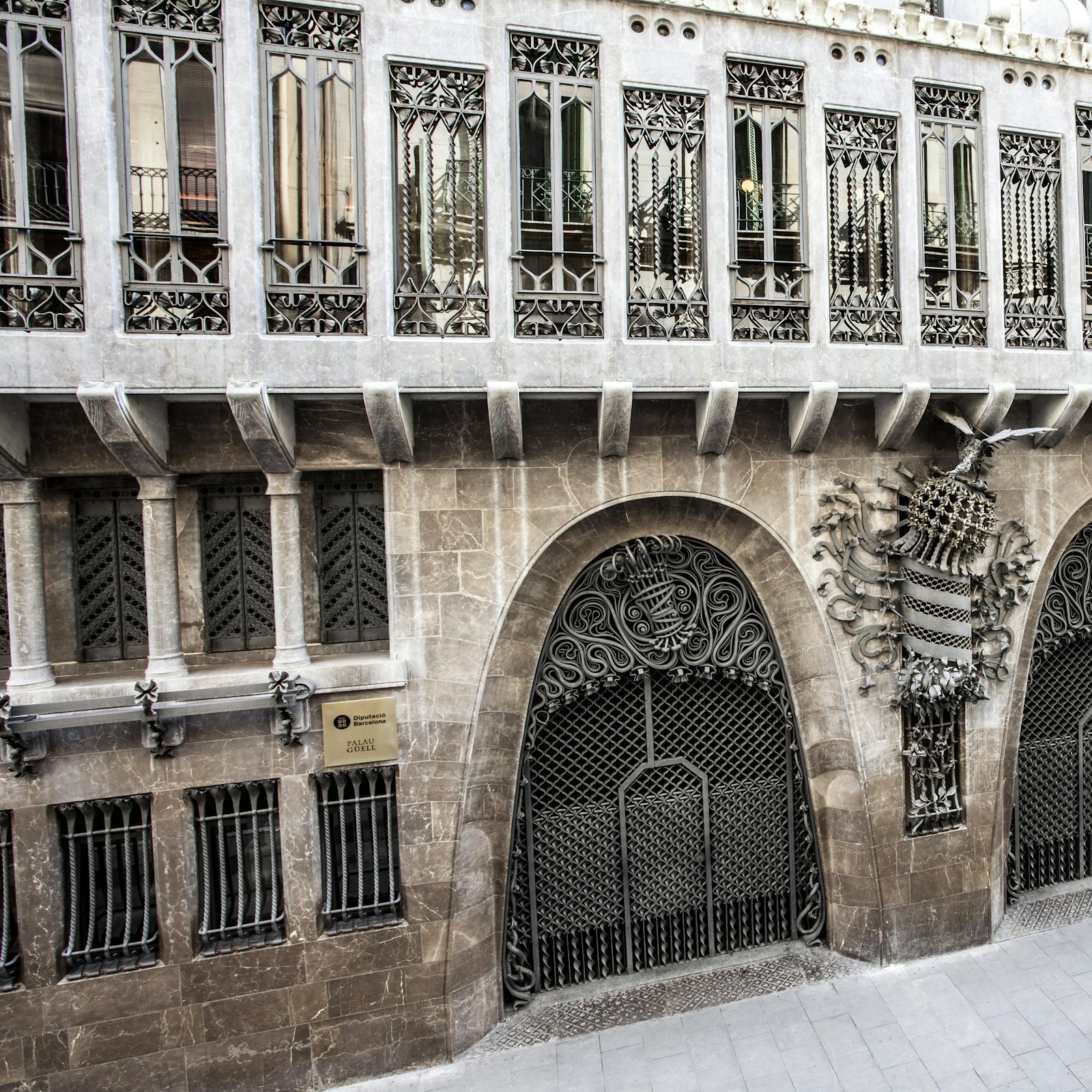
From the moment you arrive at the UNESCO World Heritage Site, it’s evident that it's not an ordinary property, like Gaudi's other designs. The elaborate ironwork on the gates sets the stage for the visual feast that awaits inside. As you enter, the light and dark spaces immediately grab you, each enhancing the other in a delicate balance. Gaudí’s use of colour brings it to life along with his use of natural light, which he was also famous for.
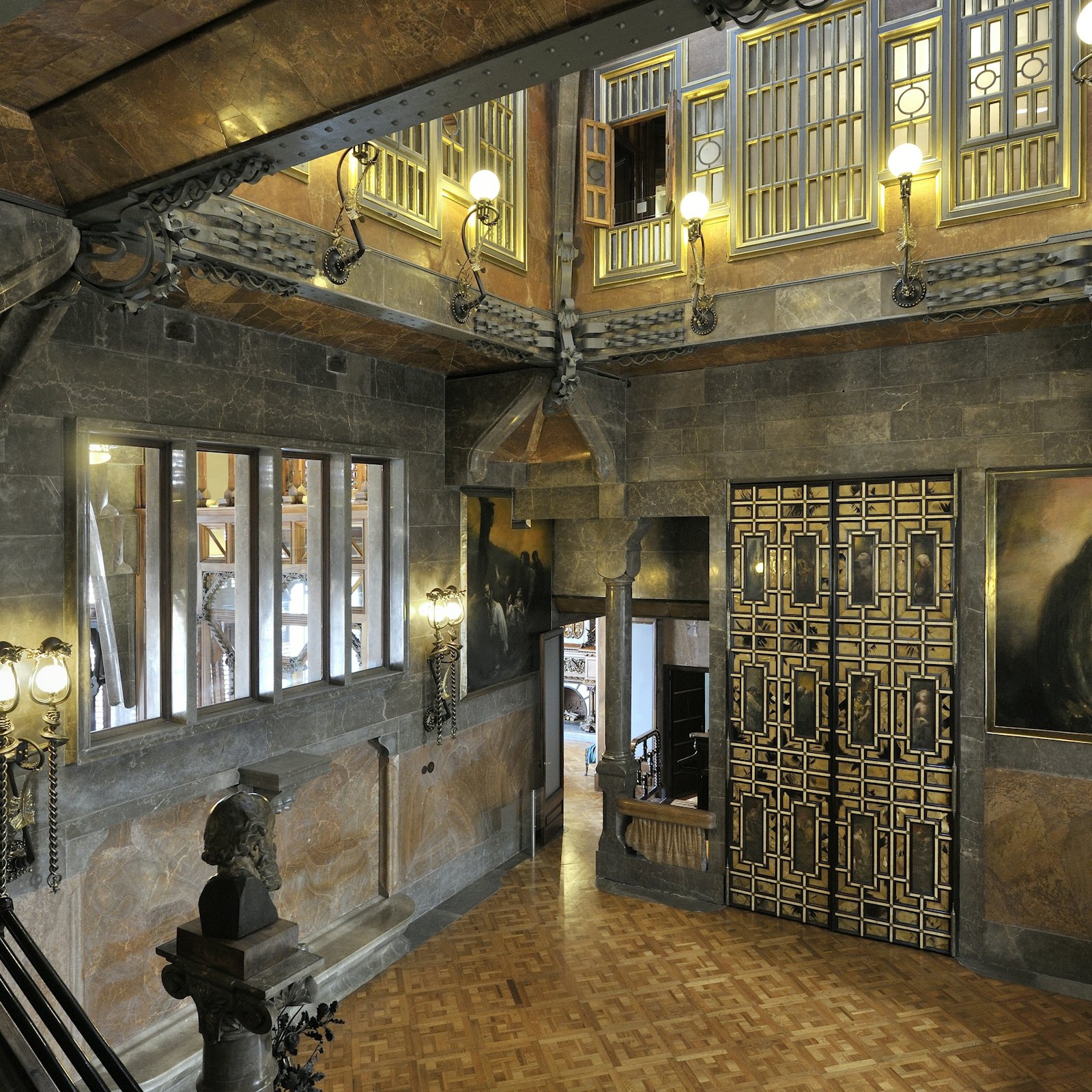
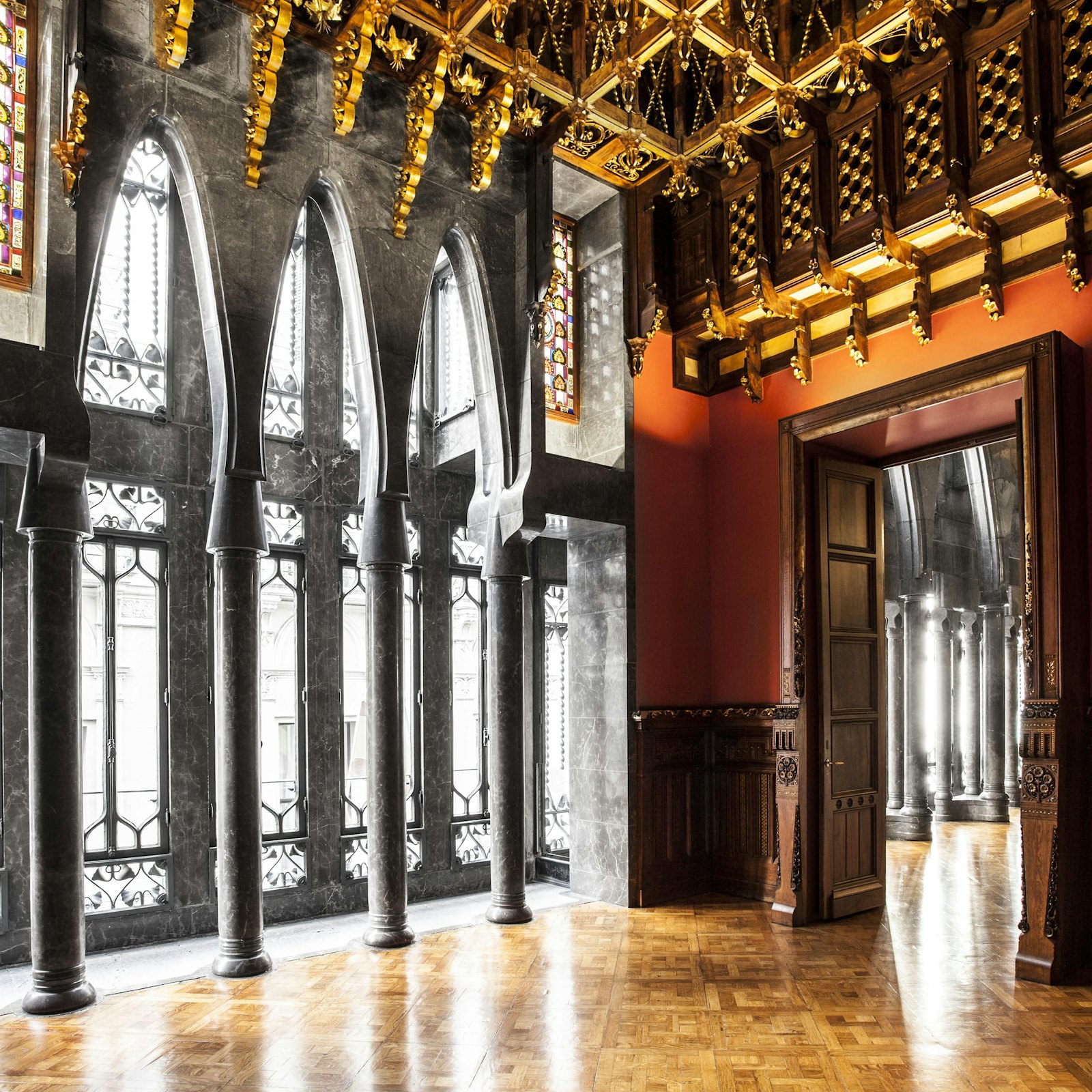
Exploring the interconnected rooms, you see different aspects of Gaudí’s genius - from the use of wood and stained glass to the symbolic elements that are seamlessly included in the architecture. The centrepiece of Palau Güell is the central hall with its parabolic dome and its blend of engineering and artistry. The incredible rooftop with its whimsical chimneys and amazing views of Barcelona.
The construction spanned a decade, from 1886 to 1896, with further modifications continuing until 1906 when it was finally complete. The palace eventually became a focal point for artistic expression and cultural gatherings.
As the 20th century progressed, Palau Güell faced neglect and deterioration. Restoration efforts began in the 1980s aiming to preserve the physical structure and show its historical and artistic significance. It's now a meticulously preserved time capsule that allows you to step back in time and enjoy the grandeur of a bygone era. Recognised as a UNESCO World Heritage Site in November 1984.
Gaudí's creations often contain symbols, and Palau Güell is no exception. It has motifs from nature, religious symbolism, and the owner's family crest. The rooftop chimneys are sculpted into shapes resembling warriors and knights, are a prime example of Gaudí's symbolic storytelling.
The palace hosts various events throughout the year, including concerts, exhibitions, and lectures, adding a contemporary layer to its historical significance. Palau Güell may not be the most famous of Gaudi's designs but it is most definitely worth taking the time to visit.
Popular Tickets

Popular Attractions
Palau Güell (Güell Palace) FAQs
- What is Palau Güell?
- Palau Güell is a property that was designed by the famous Catalan architect Antoni Gaudí for the industrial tycoon Eusebi Güell. The house is located in the 'El Raval' neighbourhood of Barcelona and is one of Gaudí's early works, which he completed between 1886 and 1888. The palace is renowned for its innovative use of space, light, and materials, and it represents a significant early example of Gaudí's unique architectural style.
- Can you visit the rooftop of Palau Güell?
- Yes, visitors can access the rooftop of Palau Güell and we think it’s one of the highlights! The rooftop features several uniquely designed chimneys and ventilation towers which are covered in colourful ceramics. The rooftop offers amazing panoramic views of Barcelona, making it a popular spot for photography!
- How long does it take to tour Palau Güell?
- A visit to Palau Güell typically takes about 1 to 1.5 hours. This allows enough time to explore the various rooms, the central hall, and the rooftop. Audio guides are available, which provide detailed explanations of the architectural features and history. You are welcome to stay longer to enjoy the property though, within opening hours.
Palau Güell Fun Facts
- Hidden Rooms: Gaudi designed Palau Güell with hidden rooms and secret passageways! He incorporated the features to give the family some privacy, given the house was often full of visitors!
- Decorative Chimneys: The roof terrace of the house has 20 chimneys and each is uniquely decorated.
- Mudejar Influence: The interior of the property shows a strong Mudejar influence which is characterised by intricate tilework, carved wood, and elaborate ironwork and reflects a blend of Christian and Islamic art.
- Organ in the Main Hall: The main hall of Palau Güell has a large and impressive pipe organ which was used for concerts and family events. Gaudi designed the hall’s acoustics specifically for this purpose.
- First Modernist Building Declared a UNESCO Site: In 1984, Palau Güell became the first building from the 'Modernisme' movement to be declared a UNESCO World Heritage Site, recognizing its cultural and historical significance.
- Symbolism: Gaudí incorporated various symbols into the design of Palau Güell, including references to the Catalan identity, Christianity, and nature, which are themes that recur throughout his work. See how many you can spot during your visit!
- Architectural Innovation: Palau Güell was one of the first buildings to use parabolic arches in its structure which showcased Gaudí’s innovative approach to architecture. The arches allowed for more open, flexible interior spaces.
- Park Güell: Barcelona’s famous and popular park was also owned by the same person, Eusebi Güell, before it was transferred to the city of Barcelona.
- Stables: The property also contains underground horse stables.
Useful Information About Palau Güell (Güell Palace)
Tips for Visiting
- Book Tickets Online: Its an easy and convenient way to book your tickets and can save you time.
- Combination Ticket: Consider a combination ticket to two of Gaudi's properties. A popular ticket is Palau Güell and Casa Milà - La Pedrera. Click HERE for combination ticket details.
- Things to do in Barcelona: See our full range of things to do in Barcelona by CLICKING HERE.
How to get there
- Palau Güell (Güell Palace), 3-5 Carrer Nou de la Rambla, 08001, Barcelona
Opening Hours
Summer Opening Hours (1st April - 30th September):
- 10:00 AM - 20:00 PM
Winter Opening Hours (1st October - 31st March)
- 10:00 AM - 17:30 PM
Closed:
- Mondays (except public holidays), 25th December & 26th December, 1st January and last week of January


