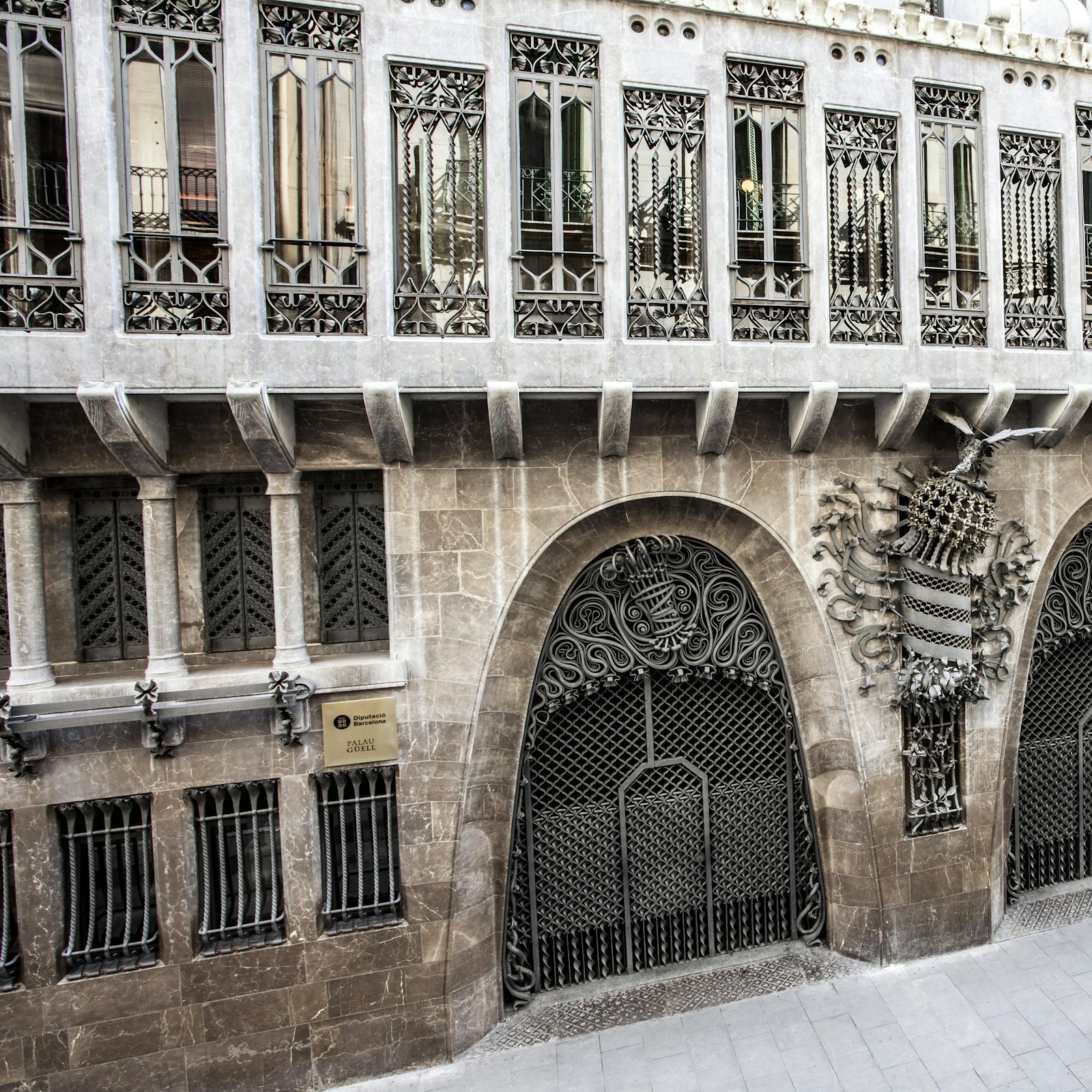
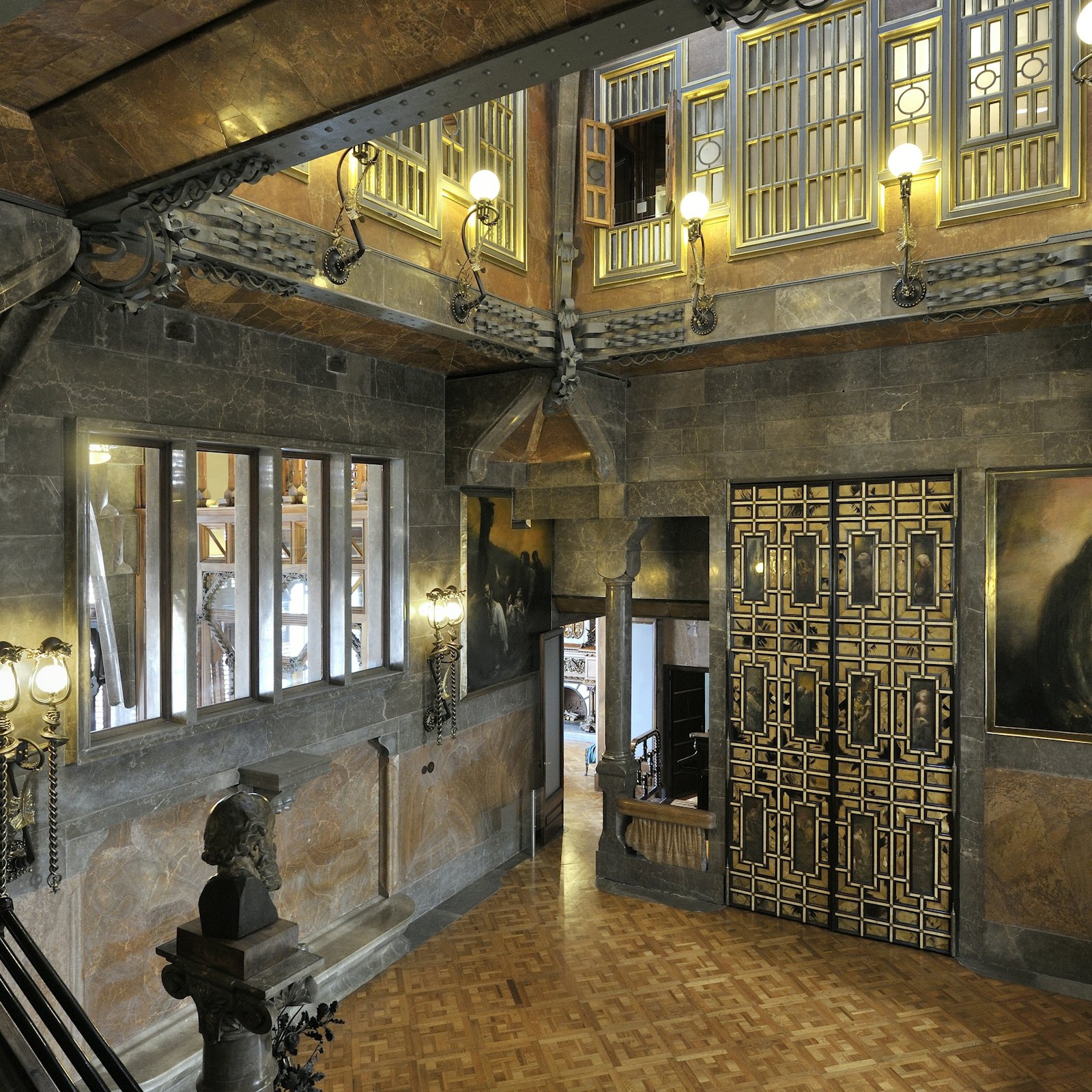
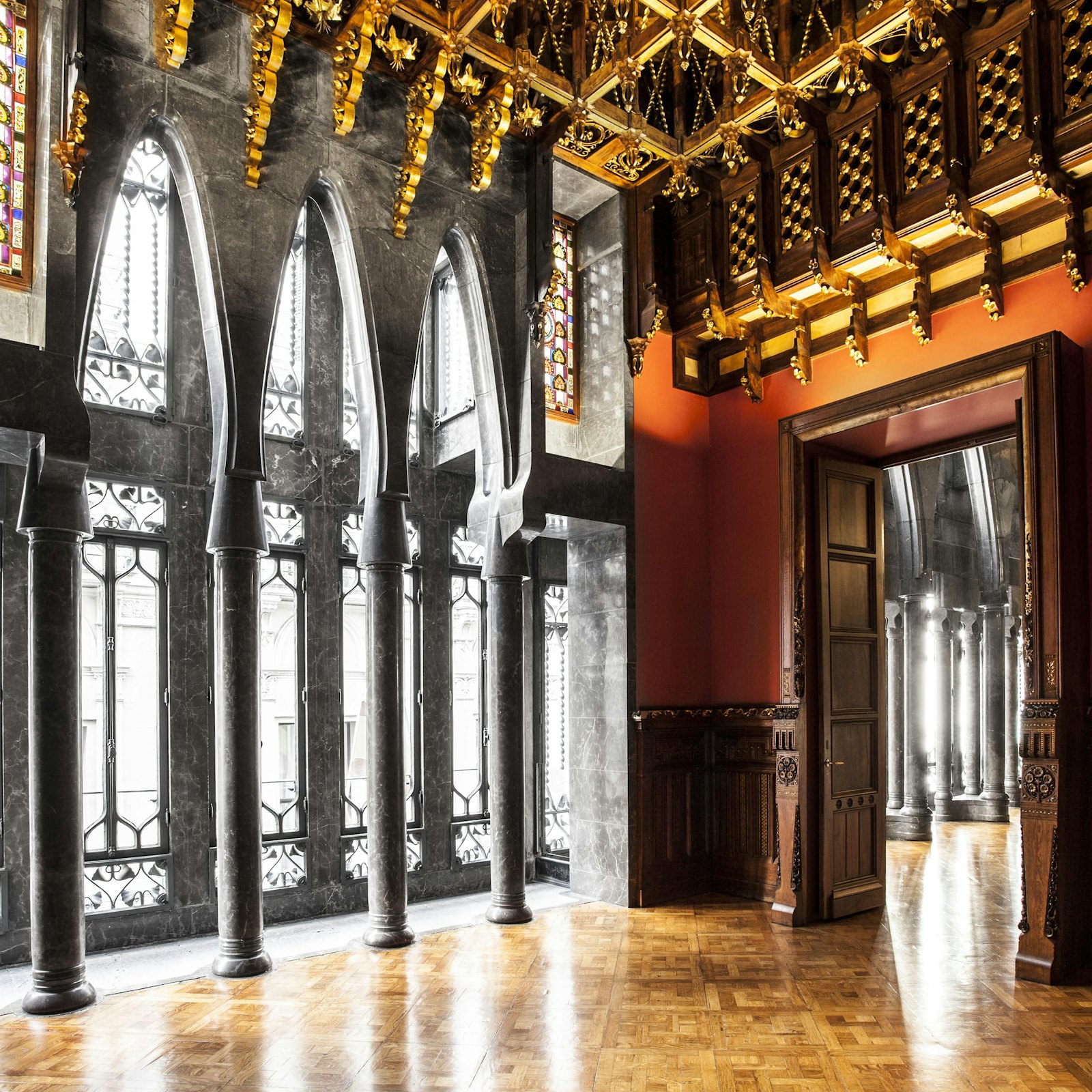
Palau Güell is a property that was designed by the famous Catalan architect Antoni Gaudí for the industrial tycoon Eusebi Güell. The house is located in the 'El Raval' neighbourhood of Barcelona and is one of Gaudí's early works, which he completed between 1886 and 1888. The palace is renowned for its innovative use of space, light, and materials, and it represents a significant early example of Gaudí's unique architectural style.
Can you visit the rooftop of Palau Güell?
Yes, visitors can access the rooftop of Palau Güell and we think it’s one of the highlights! The rooftop features several uniquely designed chimneys and ventilation towers which are covered in colourful ceramics. The rooftop offers amazing panoramic views of Barcelona, making it a popular spot for photography!
How long does it take to tour Palau Güell?
A visit to Palau Güell typically takes about 1 to 1.5 hours. This allows enough time to explore the various rooms, the central hall, and the rooftop. Audio guides are available, which provide detailed explanations of the architectural features and history. You are welcome to stay longer to enjoy the property though, within opening hours.
Palau Güell Fun Facts
Hidden Rooms: Gaudi designed Palau Güell with hidden rooms and secret passageways! He incorporated the features to give the family some privacy, given the house was often full of visitors!
Decorative Chimneys: The roof terrace of the house has 20 chimneys and each is uniquely decorated.
Mudejar Influence: The interior of the property shows a strong Mudejar influence which is characterised by intricate tilework, carved wood, and elaborate ironwork and reflects a blend of Christian and Islamic art.
Organ in the Main Hall: The main hall of Palau Güell has a large and impressive pipe organ which was used for concerts and family events. Gaudi designed the hall’s acoustics specifically for this purpose.
First Modernist Building Declared a UNESCO Site: In 1984, Palau Güell became the first building from the 'Modernisme' movement to be declared a UNESCO World Heritage Site, recognizing its cultural and historical significance.
Symbolism: Gaudí incorporated various symbols into the design of Palau Güell, including references to the Catalan identity, Christianity, and nature, which are themes that recur throughout his work. See how many you can spot during your visit!
Architectural Innovation: Palau Güell was one of the first buildings to use parabolic arches in its structure which showcased Gaudí’s innovative approach to architecture. The arches allowed for more open, flexible interior spaces.
Park Güell: Barcelona’s famous and popular park was also owned by the same person, Eusebi Güell, before it was transferred to the city of Barcelona.
Stables: The property also contains underground horse stables.
Why book with us?
Digital
Ticket Entry
Great Discounts
Available
Flexible
Cancelations
Trouble-free
Booking
Subscribe Our Newsletter & Get The Latest Deals
Thank you! Your submission has been received!
Oops! Something went wrong while submitting the form.