


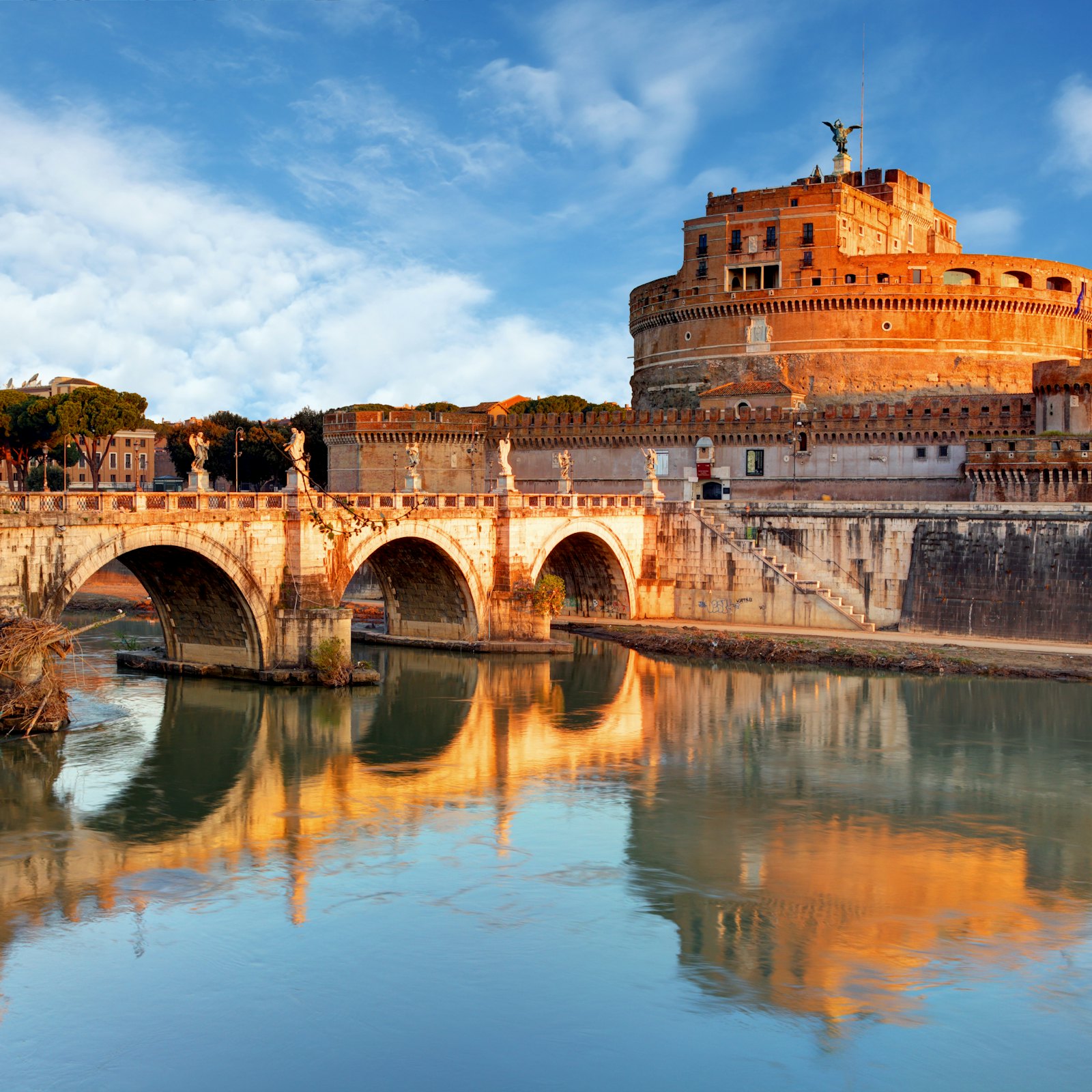
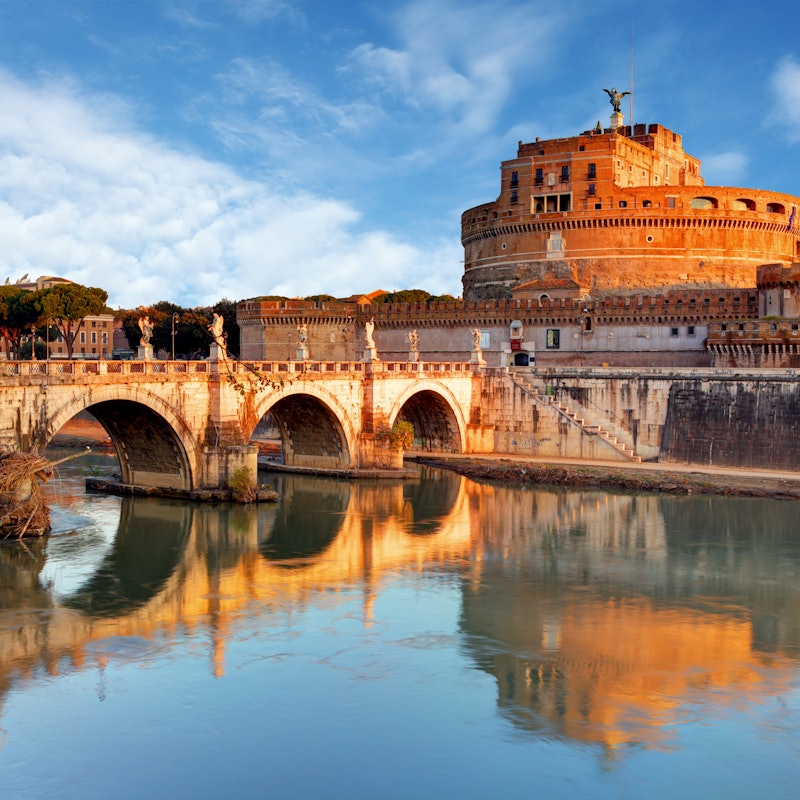
Castel Sant'Angelo: Entry Ticket
Overlook the Tiber from this iconic mausoleum-turned-museum
- Castel Sant'Angelo: Entry Ticket
- Access to permanent and temporary exhibitions
- 1 day hop on hop off bus ticket (if option selected)


Castel Sant'Angelo, Rome - Tickets and Information
- Castel Sant'Angelo Address: 50 Lungotevere Castello, 00193, Rome
- Opening Hours: 09:30 - 19:30
What is Castel Sant'Angelo and what can you see and do there
- It is one of Rome's most popular attractions. A beautiful building used as a mausoleum, a fortress and as a jail during its history.
- Visitors to Castel Sant'Angelo can see the mausoleum of Hadrian, the armoury and other military displays, art and other rooms and also enjoy views of the area including the Tiber River.
Who can enjoy Castel Sant'Angelo and what makes it different from other attractions in Rome
- Although all ages can enjoy Castel Sant'Angelo for its history, it may appeal more to adults due to its architecture.
- It's one of Rome's most important historical landmarks, so very popular on the tourist route, especially in conjunction with Rome Tourist Card, which is one of our combination tickets that includes access to multiple attractions.
Castel Sant'Angelo - A Quick Ticket Comparison
- Basic Entry Ticket: From €20.00 and includes Castel Sant'Angelo entry and an audio guide.
- Rome Tourist Card Combination Ticket: From €88.00 and includes access to Castel Sant'Angelo and Colosseum and St. Peter's Basilica. A popular option for visitors wanting to see multiple top attractions.
- Vatican City Pass Combination Ticket: From €71.50 and includes access to Castel Sant'Angelo and Vatican Museums and Sistine Chapel.
{{ticket-block-triple}}
Is Castel Sant'Angelo Worth Visiting
Castel Sant'Angelo sits on the bank of the Tiber River and is one of Rome's most popular attractions.
It was commissioned by Emperor Hadrian as a mausoleum for himself and his family and was constructed between AD 134 and 139. It is also the final resting place for Commodus, Marcus Aurelius, Caracalla, and their respective families.
Castel Sant'Angelo has served various purposes throughout its history. In AD 400, the church converted it into a fortress to protect Rome from Barbarian invasions.
Later, it was used as a prison, with some of the cells still visible today.
It also functioned as a castle before being transformed into the museum that it is today.
It was also featured in Puccini’s opera 'Tosca'!
One of its intriguing features is the secret passages that were used by popes as escape routes! The most famous is the ‘Passetto di Borgo’, which is a fortified corridor that connects Castel Sant'Angelo to the Vatican! The passage was famously used by Pope Clement VII during the ‘Sack of Rome’ in 1527.
The tunnels aren’t open to the public unfortunately.
Castel Sant'Angelo also houses the ‘Museo Nazionale di Castel Sant'Angelo’, which has a collection of art, historical artefacts, and weaponry. From the terrace, you can also enjoy some of the best panoramic views of Rome and the Tiber River.
What You See At Castel Sant'Angelo
- Mausoleum of Hadrian: The mausoleum is on the first floor and lists the names of those buried there.
- Passage of Boniface IX: This is on level 2 and is an impressive architectural feature by Niccolo Lamberti for Boniface IX Tomacelli. It features reconstructed versions of medieval weapons. You will also see trap doors and a guard room.
- Armoury & Military Equipment: The armoury is on the 3rd floor along with a courtyard where you will see a display of weapons that were used at the time that have been set up for battle. There is a much larger display of around 6000 weapons in the National Museum of Castel Sant'Angelo.
- The Alexander VII Walkway: This was a later addition to Castel Sant'Angelo. A circular corridor that was added in the 17th century by the family of Pope Alexander VII of the Chigi and it offers views of the surrounding area. You will also find a cafe on the walkway where you can enjoy a coffee and snack.
- The Courtyard of the Angel and Papal Apartments: The Courtyard of the Angel is on the 3rd floor. It served as the reception to the Papal Apartments and the armoury is on one side and the Papal Apartments on the other. The courtyard is also home to a statue of the holy archangel Michael. The Papal Apartments offer incredible frescos and other works of art.
- The Library: The library was close to the fortress's most secure area - the 'Sala del Tesoro'. It was used to file the papal archives and important documents. You will find beautiful frescoes on the vault's ceiling. The 'Sala dell'Adrianeo' and the 'Sala dei Festoni' which are two adjacent chambers that also form part of the library.
- Paolina Rooms: The 'Sala Paolina' rooms serve as both the welcome area and the living room of 'Paul III Farnese'. They were very important locations as Ambassadors and other guests were welcomed in the hall of honour.
Popular Tickets
Popular Attractions
Castel Sant’Angelo FAQs
- What is Castel Sant’Angelo?
- Castel Sant'Angelo is a historic fortress in Rome that was originally built as a mausoleum for Emperor Hadrian and then later transformed into a military fortress, papal residence, and museum! It’s one of the most popular tourist attractions in Rome.
- Where is Castel Sant’Angelo?
- Castel Sant’Angelo is near Vatican City on the banks of the Tiber River in Rome.
- Who built Castel Sant’Angelo?
- Castel Sant’Angelo was commissioned by Roman Emperor Hadrian in 135 AD as a mausoleum for himself and his family.
- Why is it called Castel Sant’Angelo?
- The name Castel Sant’Angelo comes from a legend that the Archangel Michael appeared at the top of the structure in 590 AD to end a plague in Rome.
- What is the Passetto di Borgo at Castel Sant’Angelo?
- It’s a secret passageway that connects Castel Sant'Angelo to the Vatican and it was used by popes to escape in times of danger!
- What are the main features of Castel Sant’Angelo?
- Some of the key features include the angel statue on top, the Renaissance frescoes, and the Papal apartments.
- What artefacts are displayed in Castel Sant’Angelo?
- It houses military weapons, Renaissance art, and artefacts from its time as a papal residence.
- Is Castel Sant’Angelo part of the Vatican?
While it’s closely linked to the Vatican via the Passetto di Borgo, it is not technically part of Vatican City.
Castel Sant’Angelo Fun Facts
- Multiple Uses: Castel Sant'Angelo has been repurposed multiple times. Originally it was built as a mausoleum and then it was used as a fortress, prison, papal residence, and is now a museum!
- Angel Statue: The famous angel statue that sits at the top of the building has been replaced multiple times for various reasons. The current one, made by Peter Anton von Verschaffelt, was installed in 1753!
- Clever Defence: The castle’s defensive structure includes a spiral ramp that runs through the core, making it easier to move soldiers and supplies.
- Escape Route: During the sack of Rome in 1527, Pope Clement VII used the Passetto di Borgo to escape to Castel Sant’Angelo!
- Design: The building’s shape was inspired by ancient Etruscan tombs, with a cylindrical design and central rotunda.
- Melted for Money: The original bronze statue of Emperor Hadrian that once stood proudly at the mausoleum was likely melted down during mediaeval times!
- Treasury: The castle once served as the treasury of the Vatican, safeguarding precious artefacts and documents.
- Cannons: During its time as a fortress, Castel Sant’Angelo was equipped with artillery and cannon placements to defend against invaders.
- Legend Has It: A famous legend says that the Archangel Michael appeared during a plague, sheathing his sword as a sign that the epidemic was over.
- Bridge Name: The name of the bridge leading to the castle, Ponte Sant’Angelo, comes from its statues of angels, each of which is holding instruments of Christ's Passion.
Useful Information About Castel Sant'Angelo
Tips for Visiting
- Book Tickets Online: Its an easy and convenient way to secure your tickets and can save a lot of time.
- Combination Tickets: Consider one of our great combination tickets for Castel Sant'Angelo that also include access to other attractions in Rome. Click HERE for combination ticket options.
- Things to do in Rome: See our full range of things to do in Rome by CLICKING HERE.
Castel Sant'Angelo Address
- Castel Sant’Angelo, Lungotevere Castello, 50, Roma, 00193
Opening Hours
- Tuesday: 09:00 - 19:30
- Wednesday: 09:00 - 19:30
- Thursday: 09:00 - 19:30
- Friday: 09:00 - 19:30
- Saturday: 09:00 - 19:30
- Sunday: 09:00 - 19:30
- Monday: CLOSED
How to get to Castel Sant'Angelo
- Bus: 23, 271, 280, 62 and 982 will all take you to Bus Stop: Piazza Pia
- Train: From Roma Termini get on a train towards Roma San Pietro Station. It will take you around 20 minutes to walk from there.
- Light Rail/Tram: Number 19 to Castel Sant'Angelo. The closest station is Risorgimento/S. Pietro and its around a 10 minute walk from there.
- Metro: Line A to Lepanto Station with a 15-minute walk or Lina A to Ottaviano, again, around a 15-minute walk.
- Car: There isn't any onsite car parking available but there are three main car parks close by being: Garage Properzio Car Park; Gran Melia - Giancolo or The Prati Car Park. All have their own costs involved though which may vary.


