


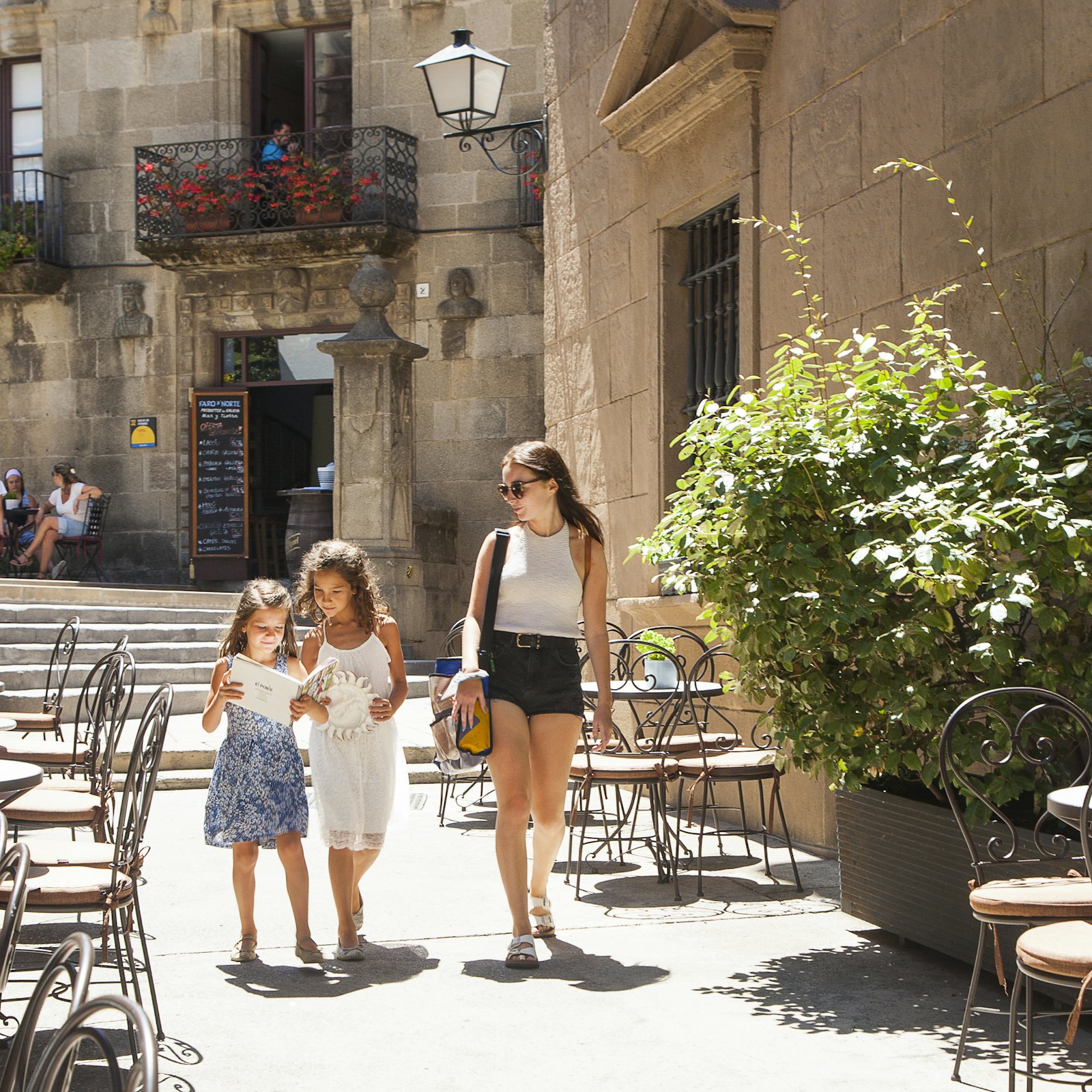
Poble Espanyol: Skip The Line Ticket
The incredible full scale replica Spanish village
- Poble Espanyol: Skip The Line Entry Ticket
- Admission to the Fran Daurel Museum
- Admission to the multimedia space Fiesta


Poble Espanyol Tickets and Visitor Information
What is Poble Espanyol?
- Poble Espanyol is one of Barcelona’s most unusual attractions. It's an open-air village museum where you can explore architectural styles, crafts and traditions inspired by different regions of Spain.
- Built for the 1929 International Exhibition, it was originally meant to be temporary. Instead, it became a permanent cultural space where you can walk through full-scale replicas of traditional Spanish streets, squares and buildings.
- It offers a mix of museum, artisan workshops, art space and event venue, all set on Barcelona's Montjuïc Hill.
Quick Information
- Address: Poble Espanyol 13, Av Francesc Ferrer i Guardia, 08038, Barcelona
- Opening Hours: May - October: Daily from 08:00 - Other times of year vary.
- Suggested Visit Duration: 1.5 - 3 hours
- Ticket Options
Why Visit Poble Espanyol?
Poble Espanyol isn't your average museum where you walk around reading information panels. At Poble Espanyol, one moment you're wandering through a recreated Andalusian courtyard, the next you're watching a craftsperson or stopping for tapas in one of the village squares.
Visitors can:
- Explore at your own pace without a fixed route
- Watch craftspeople working in real time
- Visit the Fran Daurel Museum of contemporary art
- Stop for food or drinks in open-air squares
- Stumble into live performances or events depending on the day
What You Can See at Poble Espanyol
- More than 100 full-scale buildings inspired by towns and villages from across Spain
- Artisan workshops where craftspeople create ceramics, glassware, jewellery and leather goods
- The Fran Daurel Museum, showing works by artists including Picasso, Miró and Dalí
- Restaurants and bars serving tapas, regional dishes and Spanish wines
- Seasonal festivals, concerts and cultural events throughout the year
{{ticket-block-triple}}
About Poble Espanyol
Originally created for the 1929 International Exhibition, Poble Espanyol was designed to show Spain's architectural and cultural diversity. The project was so popular that it remained after the exhibition ended and has since become one of Barcelona's most popular attractions.
Before construction began, the project's creators travelled across Spain, studying more than 1,500 towns and villages to ensure the architecture reflected the country's regional diversity.
It’s spread over 49,000 square metres and has stalls selling artisan products, including glass, leather, ceramics, and jewellery, much of which is crafted on-site and a lot of which you can actually watch being made and in some cases join in the process.
Highlights
- Architecture: Poble Espanyol replicates the architectural styles from various regions of Spain. Each building is a recreation using traditional methods, showing Spain's architectural diversity. The village layout mirrors a typical Spanish town and has central squares like the 'Plaza Mayor,' where performances and festivals take place. Regions include Andalusia, Catalonia, and the Basque Country.
- Artisan Workshops: The artisans bring the space to life with their workshops. They demonstrate techniques in ceramics, textiles, and metalwork. Visitors can participate and buy handcrafted items as souvenirs.
- The Fran Daurel Museum: The museum houses an impressive collection of contemporary art, including works by Picasso, Miró and Dalí.
- Food: Food and drink are also part of the experience, with bars and restaurants serving regional favourites including tapas, paella, pintxos and churros.
Families often enjoy Poble Espanyol because there's plenty of space to explore, regular activities for children and enough variety to keep different age groups interested.
Popular Tickets

Popular Attractions
Poble Espanyol FAQs
- What is Poble Espanyol?
- A cultural and architectural open-air museum in Barcelona, Spain.
- Where is Poble Espanyol located?
- Poble Espanyol is located on Montjuïc Hill in Barcelona.
- When was Poble Espanyol built?
- It was constructed in 1929 for the Barcelona International Exposition.
- Why was Poble Espanyol created?
- It was designed to showcase the architecture, culture, and crafts of different regions of Spain for the World Expo.
- What can you see at Poble Espanyol?
- You can see replicas of 117 buildings from different Spanish regions, as well as exhibitions, workshops, and performances.
- Is Poble Espanyol suitable for families?
- Yes, it is family-friendly with activities, workshops, and spaces for children.
- Can you buy local crafts and souvenirs in Poble Espanyol?
- Yes, there are artisan workshops and stores where you can buy handmade crafts and souvenirs.
- Are there restaurants inside Poble Espanyol?
- Yes, there are several restaurants and cafés offering traditional Spanish food.
- How long do you need to visit Poble Espanyol?
- The average visit lasts between 1.5 - 3 hours.
Poble Espanyol Fun Facts
- One-of-a-kind Museum: Poble Espanyol is one of the few places in the world where you can see architectural styles from all over Spain in one spot.
- Built in 13 Months: The entire complex was built in just 13 months in preparation for the 1929 International Exposition!
- Temporary Becomes Permanent: Poble Espanyol was originally meant to be demolished after the exhibition but was saved due to its popularity and is now a permanent fixture!
- The Alhambra Connection: One of the most famous areas inside Poble Espanyol is inspired by Granada’s Alhambra and features similar arches and Islamic architecture.
- Architectural Diversity: Poble Espanyol includes a wide range of Spanish architecture, from Andalusian courtyards to Castilian squares and Galician houses.
- Artisan Village: Poble Espanyol has live artisans creating pottery, leather goods, glass, and jewellery, giving visitors a hands-on view of traditional crafts.
- Museum of Contemporary Art: Poble Espanyol also houses the Fran Daurel Museum, which features works by famous artists like Picasso, Dalí, and Miró.
- Interactive Workshops: You can participate in various workshops such as glassblowing, ceramics, and painting, making it an interactive cultural experience.
- Themed Zones: Poble Espanyol is divided into thematic areas which represent the different parts of Spain, such as Galicia, Aragón, and Andalusia.
- Panoramic Views: Since it is located on Montjuïc Hill, Poble Espanyol offers stunning views of Barcelona and the surrounding area.
Useful Information About Poble Espanyol
Tips for visiting Poble Espanyol:
- Book Tickets Online: Its an easy and convenient way to get your tickets and can also save a lot of time, especially in the peak season months.
- Combination Tickets: See our range of combination tickets that include Poble Espanyol, such as including a trip on the Montjuïc Cable Car.
- Plan Your Visit to Avoid Crowds: Poble Espanyol can get quite busy, especially during weekends and holidays. If you prefer a more relaxed experience, consider visiting on a weekday or early in the morning.
- Enjoy the Cultural Events: It hosts a variety of cultural events, including live music, dance performances, and traditional festivals.
How To Get There
- Poble Espanyol, 13,Av Francesc Ferrer i Guardia, 08038, Barcelona
- Via Bus: Routes 13,23 & 150 all stop at the entrance.
Poble Espanyol Opening Hours
- Monday: 10:00 - 20:00
- Tuesday: 10:00 - 23:59
- Wednesday: 10:00 - 23:59
- Thursday: 10:00 - 23:59
- Friday: 10:00 - 23:59
- Saturday: 10:00 - 23:59
- Sunday: 10:00 - 23:59


