


3 Houses of Gaudi
Visit Gaudí's three houses with one time-saving ticket, plus an audio guide
- Casa Batlló: Entry Ticket
- Casa Milà - La Pedrera: Entry Ticket
- Casa Vicens: Entry Ticket
- Barcelona: Audio Guide App
- 10% Bonus Discount


Gaudí Barcelona - Tickets and Visitor Information
What is Gaudí Barcelona?
Gaudí Barcelona refers to the collection of buildings, parks and other works in Barcelona designed by Antoni Gaudí, one of the most important architects of the Catalan Modernisme movement.
- Gaudí designed some of Barcelona's best-known attractions, including the Sagrada Família, Park Güell, Casa Batlló and Casa Milà - La Pedrera.
- Several of his works are part of the UNESCO World Heritage Site known as the Works of Antoni Gaudí.
- Seven properties in and around Barcelona are included in the UNESCO listing, including Park Güell, Casa Batlló, Casa Milà, Casa Vicens, Palau Güell, the Crypt at Colònia Güell and Gaudí's work on the Nativity façade and Crypt of the Sagrada Família.
- Some of Gaudí's buildings can be visited inside, while others can be viewed from outside.
- Tickets are available for several of the main Gaudí attractions, as well as combination tickets covering more than one attraction.
{{ticket-block-triple}}
Antoni Gaudí i Cornet (1852 - 1926)
Antoni Gaudí is the architect responsible for some of Barcelona's most famous landmarks and popular attractions. Born on June 25, 1852, in Reus, Spain, he passed away on June 10, 1926, in Barcelona, after being struck by a tram.
His career spanned several decades, during which time he pioneered architectural styles and designed world-renowned landmarks including Barcelona's Sagrada Familia. His work became closely associated with Barcelona and the Modernisme movement. He designed buildings, parks and religious architecture across Catalonia, many of which are now major attractions.
Sagrada Familia - Ticket Options
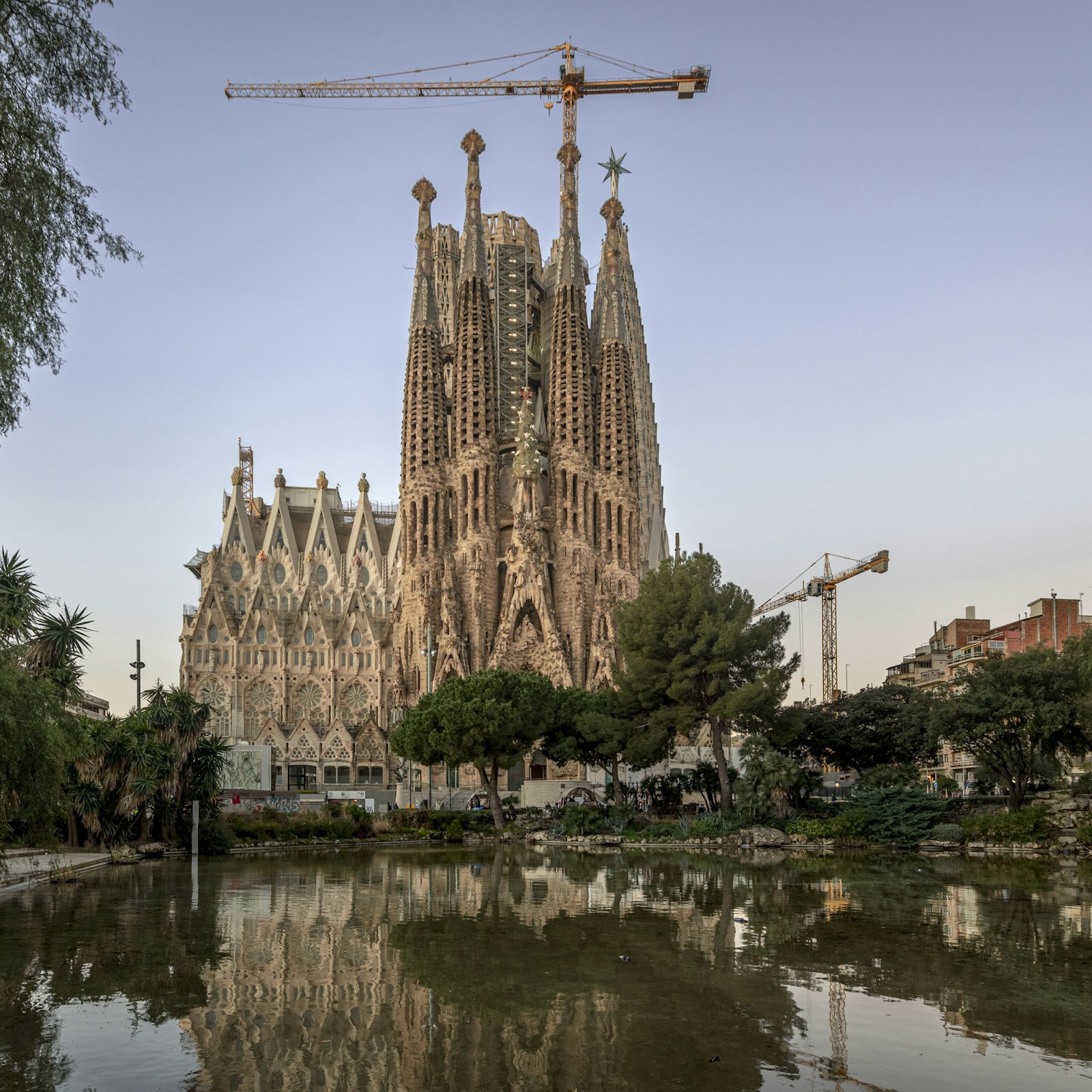
Gaudí's masterpiece - the Sagrada Familia. Started in 1882 and still unfinished. His work on the Nativity façade and Crypt of the Sagrada Família is included in the UNESCO World Heritage Site Works of Antoni Gaudí property. The Sagrada Familia was his largest and most ambitious project and is one of the most visited attractions in Barcelona.
Construction began in 1882, and Gaudí became closely involved with the project from 1883 onwards. He worked on the basilica for more than 40 years and devoted the later part of his life almost entirely to it.
The basilica's design, which Gaudí dedicated over 40 years of his life to, tells the story of Jesus' nativity, passion, and glory, through intricate architectural elements. Despite suffering damage during the Spanish Civil War and facing various construction challenges, the project continues, with successive architects striving to remain faithful to Gaudí's vision.
Casa Vicens - Ticket Options
One of Gaudí's first major commissions, Casa Vicens, was built between 1883 and 1885 in the Gràcia district of Barcelona.
It was designed for stockbroker Manel Vicens i Montaner, as a summer house, and it has influences from Catalan architecture, Islamic art, and Japanese design. Casa Vicens remained a private residence until it was purchased by the Andorran bank, Morabanc, in 2014 and subsequently opened to the public.
El Capricho - Ticket Options
While constructing Casa Vicens, Gaudí was commissioned to build ‘El Capricho’, a summer villa in Comillas, Cantabria, for Máximo Díaz de Quijano.
Although the property isn't in Barcelona and may not be one of Gaudí's most famous works, El Capricho is significant as it led to Gaudí's introduction to Eusebi Güell, and what would become a pivotal relationship in his career. The villa is open to the public, offering a glimpse into Gaudí's early work.
Palau Güell - Ticket Options
In 1888, Eusebi Güell commissioned Gaudí to design Palau Güell. A property that would be the Güell family residence and reception hall allowing the family to entertain and hold events there.
The six-level mansion features a central hall with a parabolic dome that floods the space with natural light. Gaudí's innovative use of the ‘Trencadís’ method in the chimneys and ventilation towers of Palau Güell was later replicated in his designs for Casa Batlló and Casa Milà - La Pedrera.
Park Güell - Ticket Options
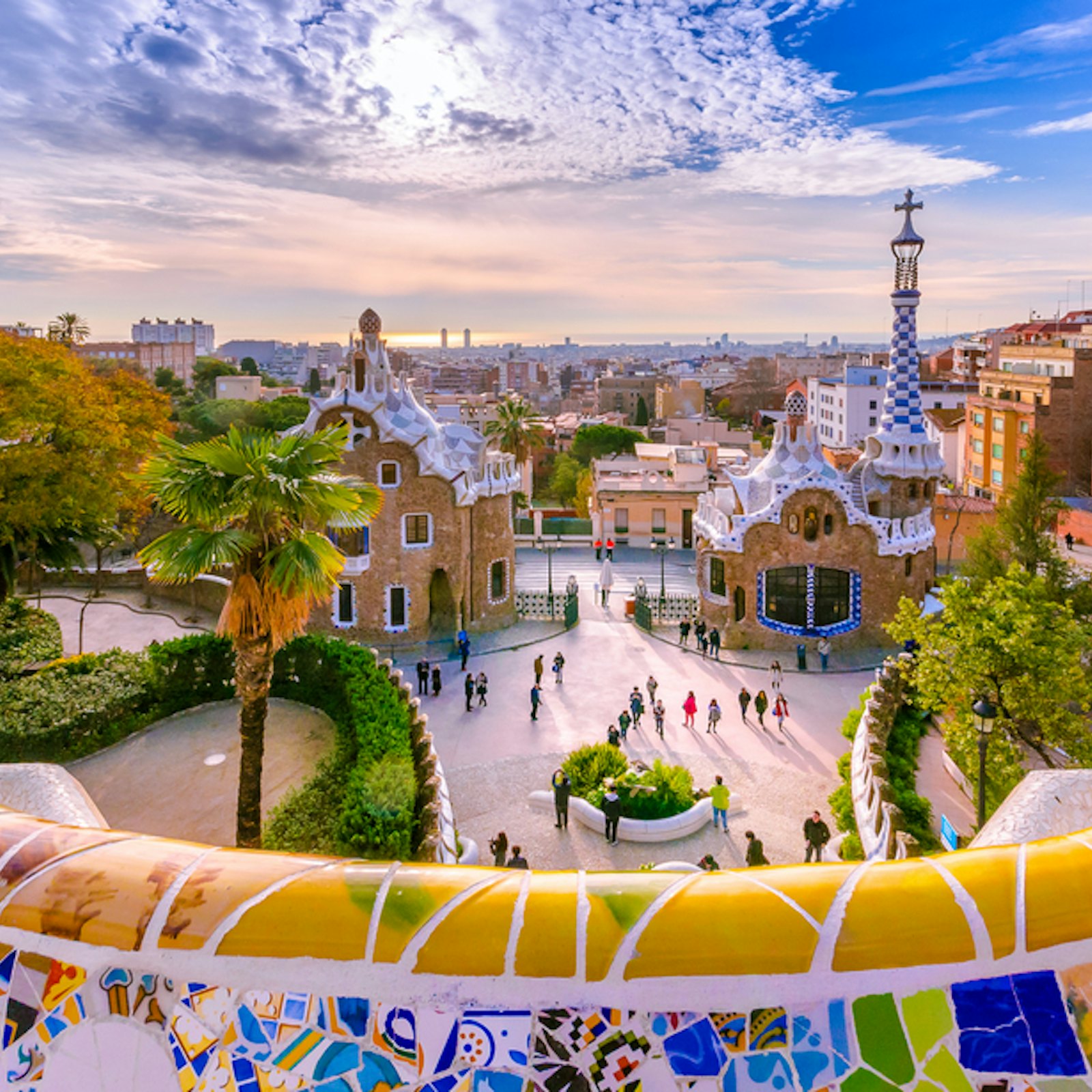
In 1900, Gaudí was tasked by Güell to create a garden city in Barcelona. Although the project to develop 60 homes on 15 hectares was never completed, Gaudí's ended up designing Park Güell after the local council purchased the land. A handful of properties were completed, one of which Gaudí went on to live in until his death.
Torre de Bellesguard - Ticket Options
Gaudí designed Torre de Bellesguard in 1900, a residence in northern Barcelona. The property incorporates mediaeval elements from the site's history as the home of the last king of the Catalan dynasty, Marti the Humane. Some of Gaudí's design features in Torre de Bellesguard would later be seen in Casa Batlló and Casa Milà, again making it an influential property in the time-line of Gaudí.
Casa Batlló - Ticket Options
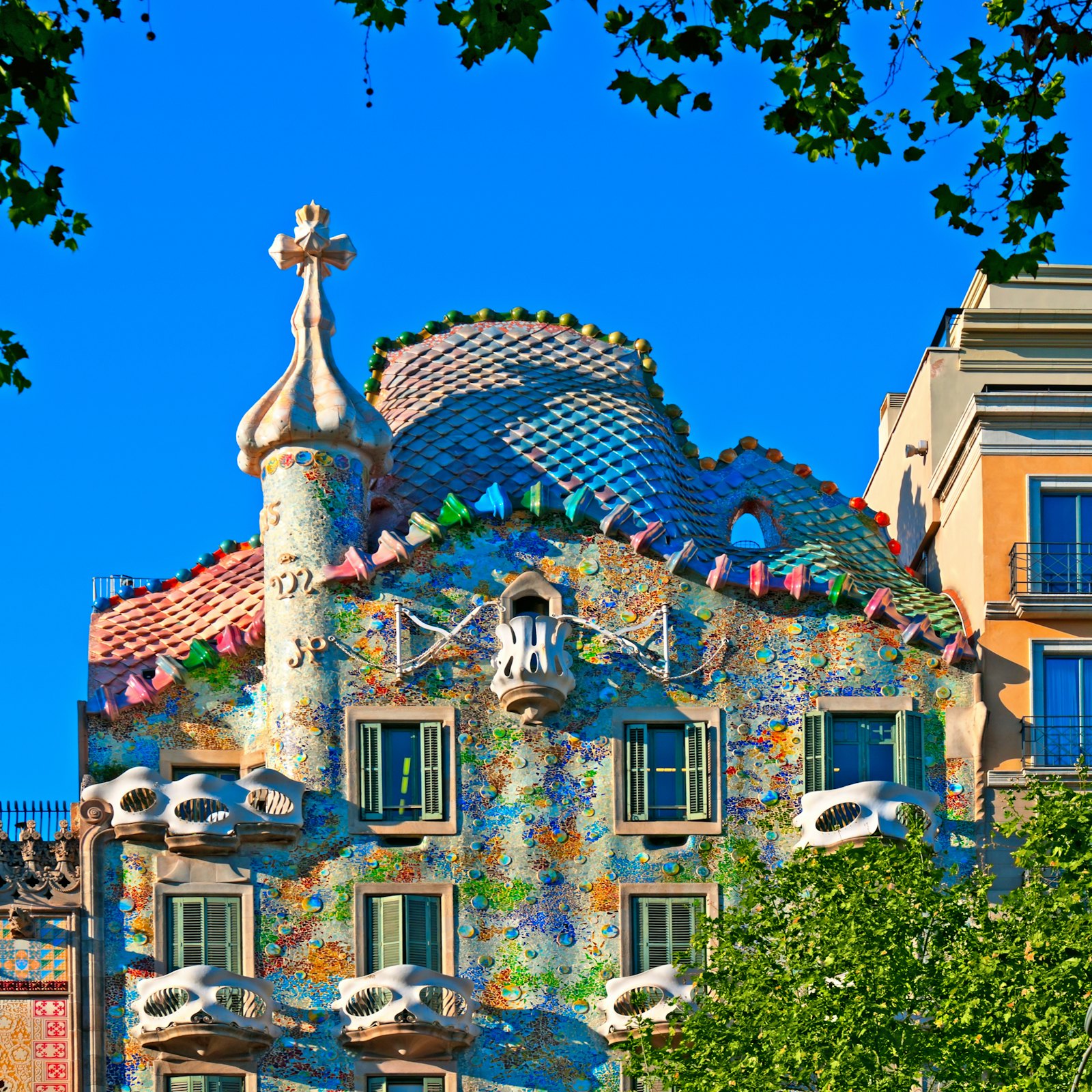
In 1904, Josep Batlló Casanovas commissioned Gaudí to renovate Casa Batlló. Known by various nicknames, including "the house of bones" and "the house of the dragon," Casa Batlló shows Gaudí's creative freedom and mastery. The building, part of UNESCO's "Works of Gaudí" collection has received numerous awards, including UNESCO World Heritage Site status.
Casa Milà - La Pedrera - Ticket Options
Casa Milà, commonly known as La Pedrera, was Gaudí's final private commission and was completed in 1912. The nickname La Pedrera means “The Quarry” and refers to the building's rough, stone-like appearance.
Commissioned by Pere ‘Milà’ and his wife Roser Segimon, the landmark on 'Passeig de Gracia' is known for its stone façade and iron balconies. Initially exceeding building regulations, it was later certified as "a monument in nature," exempting it from bylaws. Today, La Pedrera stands as a testament to Gaudí's genius and is a major attraction in Barcelona.
Popular Tickets

Popular Attractions
Gaudi Barcelona FAQs
- What is La Sagrada Família in Barcelona?
- The Sagrada Familia is a basilica in Barcelona. It was due to be completed in 2026, but has been delayed due to COVID and funding restrictions.
- What makes Casa Batlló in Barcelona so special?
- Casa Batlló is known for its colorful mosaic façade, skeletal balconies, and dragon-inspired roofline, symbolizing the legend of Saint George.
- What is Park Güell in Barcelona?
- Park Güell is a colourful public park in the city that was designed by Gaudí. It features mosaic-covered structures, pathways, and great views of Barcelona.
- Can you visit Gaudí’s former home in Barcelona?
Yes, his former home is now the ‘Gaudí House Museum’, is in Park Güell. - Is La Sagrada Família a UNESCO World Heritage Site?
- Parts of the Sagrada Familia are included in the "Works of Antoni Gaudí" UNESCO World Heritage listing.
- What is Casa Milà - La Pedrera?
- Casa Milà - La Pedrera is a building in Barcelona that was designed by Gaudí and is known for its stone façade, wrought-iron balconies, and rooftop chimneys which resemble sculptures.
- Can you climb to the towers of the Sagrada Família?
Yes. You can climb one of the towers and enjoy views of Barcelona. You need to include tower access to your ticket. - What is Palau Güell in Barcelona?
- Palau Güell is one of the lesser-known Gaudí masterpieces. An urban mansion that was built for Eusebi Güell.
- How long does it take to visit Park Güell in Barcelona?
- A typical visit to Park Güell normally lasts around 1.5 to 2 hours, but you could spend more time exploring its gardens and architectural features.
Gaudi Fun and Interesting Facts
- Nature was Gaudí’s greatest teacher: He often studied plants, animals, and natural structures to incorporate their forms into his designs.
- La Sagrada Família’s design mimics a forest: The interior columns resemble tree trunks branching out to form a canopy.
- Park Güell was initially a failed housing development project: It was intended to be a luxury housing development but only two houses were sold.
- Casa Milà - La Pedrera: La Pedrera means “The Quarry.” Locals thought its stony appearance resembled a rock quarry when it was first built.
- Gaudí is buried in La Sagrada Família: His tomb is located in the crypt of the basilica.
- Gaudí rarely drew detailed plans: He preferred to create scale models and adjust designs as construction progressed.
- Casa Batlló’s roof represents a dragon’s back: The tiles mimic scales, and the cross-shaped turret represents Saint George's lance.
- Gaudí lived modestly despite his fame: He dedicated most of his resources to his work and religious pursuits.
- La Sagrada Família is funded by visitors: Entrance fees are the primary source of funding for its construction.
- Casa Vicens was Gaudí’s first major commission: The colorful house features Moorish and Oriental influences.
- Casa Milà Chimneys: They inspired the design of the stormtroopers in Star Wars, according to some theories.
Useful Information About Gaudí in Barcelona
Fun Facts About Antoni Gaudí
- Nature-Inspired Designs: Gaudí was inspired by nature, which is evident in his designs. He often incorporated natural forms and organic shapes into his work which mimicked the curves of plants, animals, and even geological formations. The Sagrada Família features elements inspired by trees, flowers, and the human body.
- Unique Construction Techniques: Gaudí developed a method known as the "catenary arch" or "parabolic arch," which allowed him to create structures that were both strong and aesthetically pleasing. He used models made of hanging chains and weights to study the forces of tension and compression, which helped him design buildings that were innovative and structurally sound.
- Colourful Mosaics: Gaudí was famous for his use of ‘trencadís’, a type of mosaic made from broken ceramic tiles, glass, and other materials. The technique is prominently featured in Park Güell, where vibrant, colourful mosaics cover benches, walls, and sculptures, adding a whimsical and artistic touch to the park.
- Deeply Religious: Gaudí was a devout Catholic, and his faith played a significant role in his work. He dedicated the latter part of his life to the Sagrada Família, Barcelona's most popular attraction. He considered this project his life's work, and he devoted over 40 years to its design and construction, leaving detailed plans for future generations to complete the church.
Some of Gaudi's Properties in Barcelona


