


Dalí Theatre-Museum: Fast Track Entry Ticket
All things Dalí in the place he was born – step into the home of Surrealism
- Dalí Theatre-Museum: Fast Track Entry Ticket
- Access to the Dalí Jewels collection
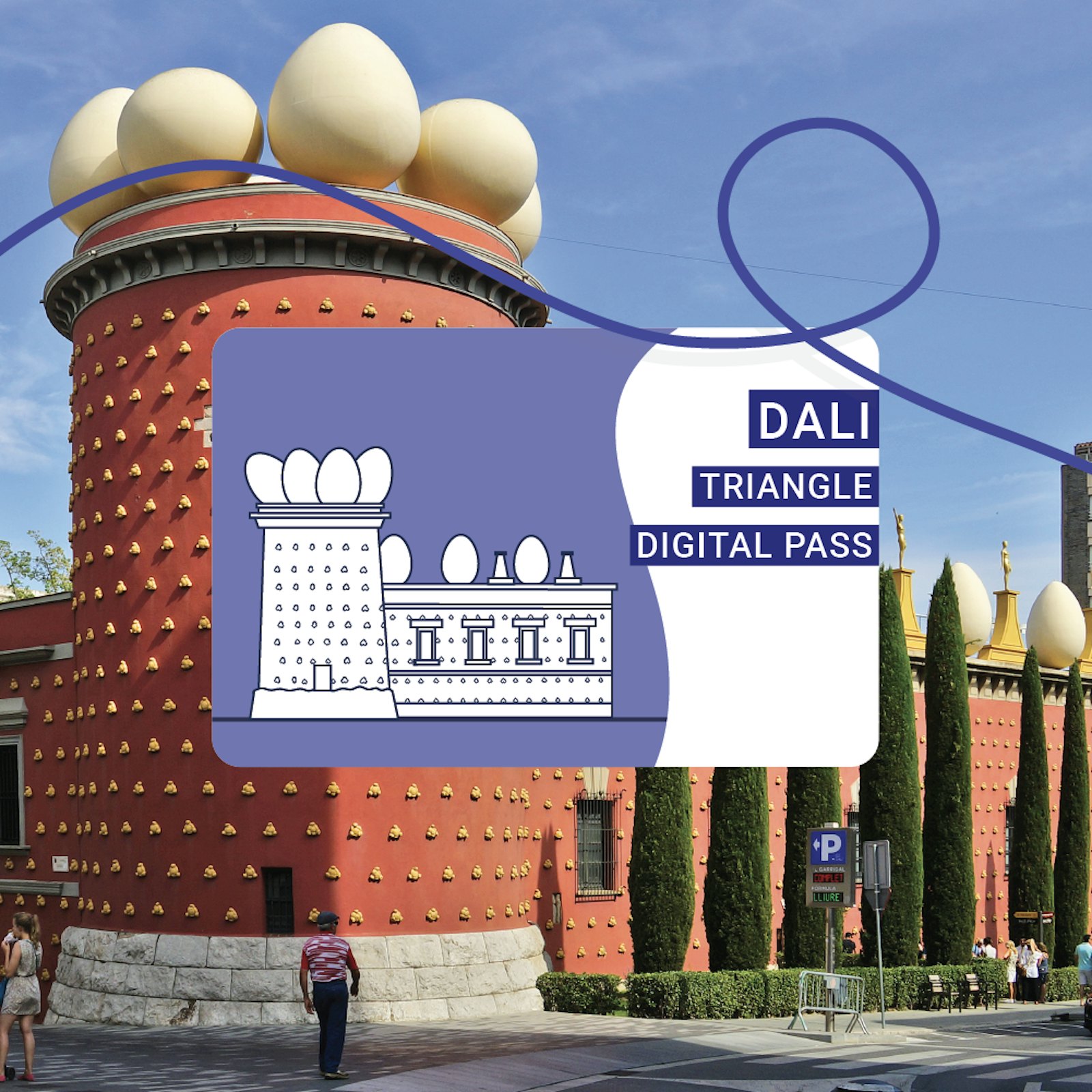
- Digital Tiqets guide to the Dalí Triangle in English


Dalí Theatre-Museum, Figueres - Tickets & Visitor Information
What is the Dalí Theatre-Museum in Figueres?
- The Dalí Theatre-Museum is one of Spain's most unusual museums and the best place to experience the extraordinary world of Salvador Dalí.
- Designed by the artist himself in his hometown of Figueres, the museum is built on the site of the former theatre, where he held his first public exhibition as a teenager, and it blends art, architecture and illusion into a surreal experience unlike any other.
- Inside, you'll discover more than 1,500 paintings, sculptures, installations and optical illusions that show Dalí's extraordinary imagination.
Quick Information
- Dalí Theatre-Museum Address: Pujada del Castell, 28, 17600, Figueres
- Opening Hours: Daily from 10:30 - 17:15
- Suggested Visit Duration: 2-3 hours
- Book Tickets
Is Dalí Theatre-Museum Worth Visiting?
- Absolutely. The museum is one of Catalonia's most visited attractions and is widely regarded as one of the world's most unusual museums.
- Even before you step inside, the building, with its giant eggs, bright red walls and golden statues, offers a glimpse into Dalí's playful imagination.
- Once inside, every room reveals something unexpected, from hidden optical illusions to monumental artworks and surreal installations.
- Whether you're already a fan of Dalí or simply curious about one of Spain's most celebrated artists, the museum offers a fascinating experience for visitors of all ages.
What You Can See at the Dalí Theatre-Museum
Highlights include:
- The glass-domed courtyard
- Rainy Taxi installation
- The Mae West Room optical illusion
- Paintings and sculptures spanning Dalí's entire career
- The Dalí Jewels collection
- The museum's egg-covered exterior and surreal architecture
How to Get to the Dalí Theatre-Museum from Barcelona
Figueres is around 140 km (87 miles) north of Barcelona, making it an easy destination for a day trip.
- By Train: Around 55 minutes on the high-speed AVE train (fastest option)
- By Car: Around 1 hour 30 minutes
- Guided Tours: Day trips from Barcelona are available and often include return transport.
{{ticket-block-triple}}
About Dalí Theatre-Museum in Figueres
Opened in 1974, the Dalí Theatre-Museum was created by Salvador Dalí to give visitors a complete insight into his artistic world. Rather than creating a conventional gallery, Dalí designed the museum as a surreal experience where the building itself is part of the exhibition.
The museum stands on the ruins of the former Municipal Theatre of Figueres, where Dalí exhibited his work for the first time as a teenager. It is now his final resting place, with the artist buried in a crypt beneath the stage.
From the moment you arrive, it's clear this is no ordinary museum. The distinctive red façade, giant rooftop eggs and gilded figures have become some of Figueres' most recognisable landmarks and perfectly reflect Dalí's love of the unexpected.
Museum Highlights
- The Glass Dome: Designed by architect Emilio Pérez Piñero, the glass dome crowns the museum and has become one of its defining features.
- The Mae West Room: One of the museum's best-known installations, the room is arranged so that, when viewed from a certain angle, the furniture and decorations combine to form the face of Hollywood actress Mae West.
- Dalí's Artwork: The museum contains hundreds of works created throughout Dalí's career, including paintings, sculptures, drawings, furniture and experimental installations. Among the best-known pieces are Soft Self-Portrait with Fried Bacon, Gala Contemplating the Mediterranean Sea and the surreal Rainy Taxi.
- Dalí's Symbols: As you explore the galleries, you'll notice recurring symbols such as ants, crutches, melting forms and distorted figures. Many of these symbols have personal meanings, while others remain open to interpretation, adding another layer to the museum experience.
Salvador Dalí
Born in Figueres in 1904, Salvador Dalí became one of the defining artists of the Surrealist movement. After studying at the Royal Academy of Fine Arts of San Fernando in Madrid, he developed a highly distinctive style that combined meticulous realism with dreamlike and often bizarre imagery.
The death of his mother when he was sixteen had a profound effect on him, and many of his later works explore themes of memory, identity and mortality.
Gala Dalí
Few people influenced Dalí more than Gala, born Elena Ivanovna Diakonova. She became his wife, muse, business manager and closest collaborator, appearing in many of his most celebrated paintings and playing a central role in his career.
After Gala's death in 1982, Dalí's health declined significantly. Following a serious house fire in 1984, he moved into rooms within the Dalí Theatre-Museum in Figueres, where he spent his final years. He died in 1989 at the age of 84 and was laid to rest in the museum beneath the former theatre stage.
Popular Tickets

Popular Attractions
Dali Theatre-Museum FAQs
- What is the Dalí Theatre-Museum in Figueres?
- The Dalí Theatre-Museum is a museum dedicated to the life and works of surrealist artist Salvador Dalí. It’s in his hometown of Figueres and is dedicated to his art, including paintings, sculptures, and installations, and is considered his final great work.
- Why did Dalí choose Figueres for the museum?
- Figueres is Dalí’s birthplace, and he wanted to give back to his hometown. The museum was built on the ruins of the town’s former Municipal Theatre, which had been destroyed in the Spanish Civil War.
- What are some of the most famous works in the Dali Theatre-Museum?
- The museum has many works including Gala Contemplating the Mediterranean Sea, The Mae West Room, and The Rainy Taxi. It also has paintings like The Spectre of Sex Appeal and sculptures like The Face of Mae West.
- What makes the Mae West Room so special at the Dali Theatre-Museum?
- The Mae West Room is an optical illusion! When viewed from a specific point, the room’s elements align to form a 3D face of the actress Mae West, one of Dalí's muses!
- Is Dalí buried in the Dali Theatre-Museum?
- Yes, Salvador Dalí is buried in a crypt beneath the museum’s stage, as per his wishes. His final resting place is one of the main attractions in the museum!
- What is unique about the Dali Theatre-Museum’s architecture?
- The museum is instantly recognizable with its red facade, decorated with large egg-shaped sculptures on the roof and golden mannequins on the walls. The combination of surreal elements makes it a work of art in itself!
Dalí Theatre-Museum Fun Facts
- Dalí was deeply involved in its creation: He didn’t just design the museum; he actively contributed to its construction, installation, and decoration, making it a truly personal work.
- It’s one of the most visited museums in Spain: Despite being located in a small town, it still attracts hundreds of thousands annually!
- The museum itself is considered Dalí's largest work of art: Dalí saw the building and its contents as one cohesive surrealist masterpiece.
- Surreal architecture: The museum features a transparent geodesic dome that covers the main building, adding to its dreamlike appearance. This dome is now an iconic symbol of the museum.
- It’s filled with optical illusions: Dalí loved to create art that tricked the eye, and the museum has many examples, including entire rooms designed as optical illusions!
- There are hidden references to Gala: Gala, Dalí's wife, is represented in many of the artworks, both overtly and subtly.
- Home to Dalí’s final piece of art: Dalí painted his last painting, Swallow’s Tail, in the museum’s tower studio, known as the “Tower of the Winds.”
Salvador Dalí - Did You Know...
- Named After his Brother: Dali was actually named after his dead brother, Salvador, who died before he was born and his parents believed he was the reincarnation, which also impacted him throughout his life.
- Famous Moustache: Dali's famous trademark moustache was inspired by the famous Spanish painter, Diego Velázquez.
- Famous Logo: Dali is actually responsible for designing the famous 'Chupa Chups' lolly logo and the company still uses it today!
- Expelled: Dali was expelled from art school twice for rebellious behaviour and refusing to take exams!
- Unusual Pet: Dali had a pet anteater whilst living in Paris and could often be seen walking it around the city!
Useful Information About Dali Theatre-Museum, Figueres.
Tips for Visiting
- Book Tickets Online: It's a popular attraction, so it can be easier to book tickets online to guarantee your space.
- Combination Tickets: Consider one of our combination tickets.
How to get there
- Dalí Theatre-Museum, Pujada del Castell, 28, 17600, Figueres
Opening Hours (October - December)
- Monday: Closed
- Tuesday: 10:30 - 17:15
- Wednesday: 10:30 - 17:15
- Wednesday: 10:30 - 17:15
- Thursday: 10:30 - 17:15
- Friday: 10:30 - 17:15
- Saturday: 10:30 - 17:15
- Sunday: 10:30 -17:15


