


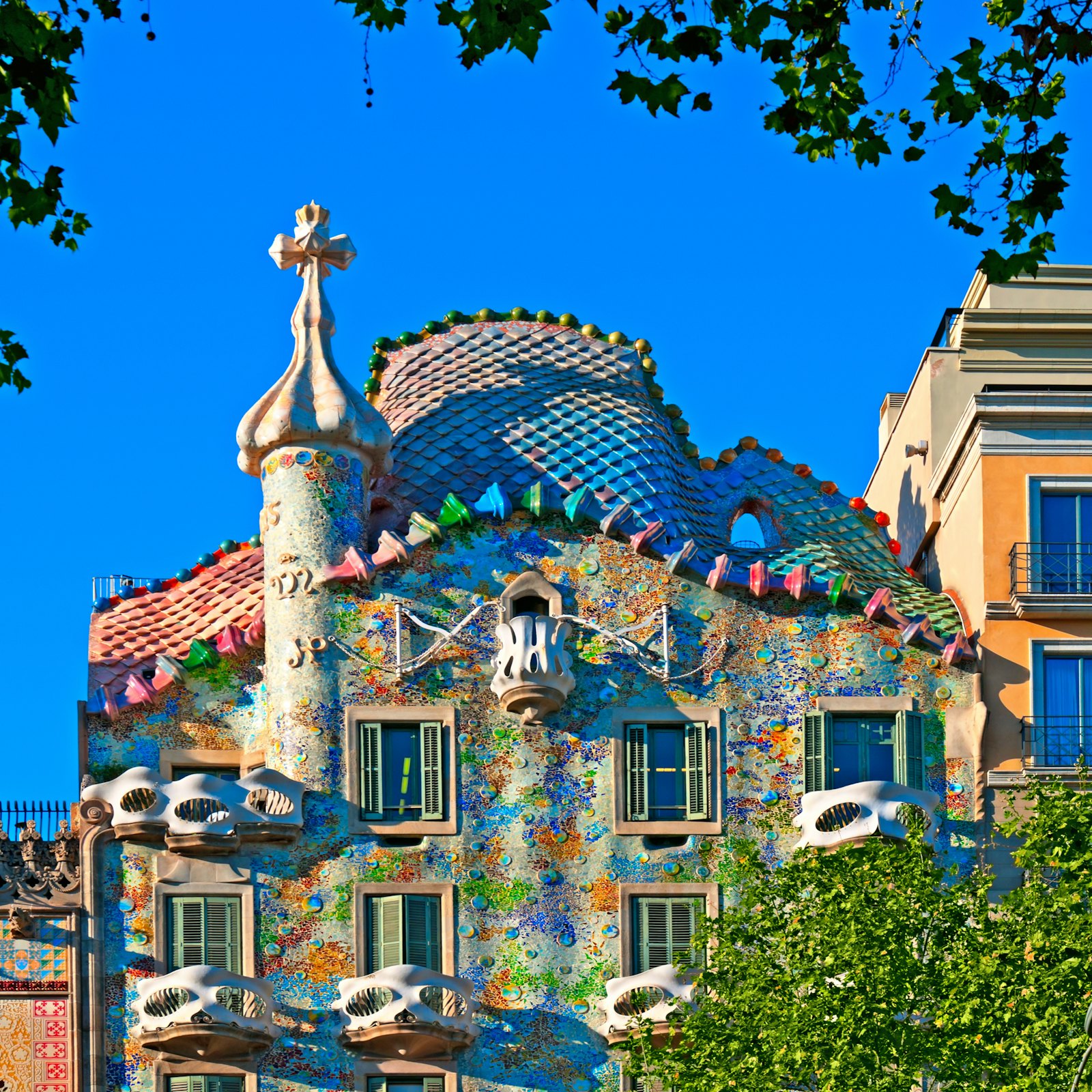

Casa Batlló and Casa Milà - La Pedrera: Combination Ticket
Book once and visit two of Barcelona's most popular tourist attractions!
- Casa Milà - La Pedrera: Entry Ticket
- Casa Batlló: Entry Ticket


Casa Batlló, Barcelona - Tickets and Visitor Information
What Is Casa Batlló?
- Casa Batlló Barcelona is one of the city's most famous landmarks and one of the finest examples of Catalan Modernisme architecture.
- Designed by the architect Antoni Gaudí, the colourful building is known for its wave-shaped façade, dragon-inspired roof and imaginative interiors.
- Located on Passeig de Gràcia in the heart of Barcelona, Casa Batlló was originally built in 1877 before being completely transformed by Gaudí between 1904 and 1906.
- It is a UNESCO World Heritage Site and one of the city's most visited attractions.
Quick Information
- Address: Casa Batlló, Passeig de Gràcia, 43, 08007, Barcelona
- Opening Hours: Monday - Sunday: 09:00 - 22:00 (last entry at 21:15)
- Suggested Visit Duration: 1.5 - 2 hours
- Architect: Antoni Gaudí
- Ticket Options
Is Casa Batlló Worth Visiting?
- Yes. Casa Batlló is one of Barcelona's most popular attractions and is one of Antoni Gaudí's greatest masterpieces.
- Its colourful architecture, imaginative interiors and exhibitions make it suitable and enjoyable for families.
What You See At Casa Batlló
- The colourful dragon-inspired façade along with Gaudí's original interiors and furniture.
- The Noble Floor.
- The Patio of Lights.
- The attic with its rib-like arches and the rooftop terrace and sculpted chimneys.
- The immersive Gaudí Cube (360° experience).
{{ticket-block-triple}}
About Casa Batlló
Casa Batlló is part of the "Works of Antoni Gaudí" UNESCO World Heritage Site listing. The building was originally constructed in 1877 by architect Emilio Sala Cortés, one of Gaudí's former professors.
In 1903 it was purchased by the wealthy textile industrialist Josep Batlló, who commissioned Antoni Gaudí to completely transform the building. Rather than demolishing it, Gaudí redesigned almost every part of the house between 1904 and 1906, creating one of the most imaginative buildings ever constructed.
The Batlló family owned the house until the 1950s. It then changed hands several times and was purchased by the Bernat family in the 1990s, who carefully restored the property and opened it to the public in 1995 and the family still owns it today.
Popular Tickets

Popular Attractions
Casa Batlló FAQs
- What is Casa Batlló in Barcelona?
- Casa Batlló is a modernist building in Barcelona that was designed by the renowned architect Antoni Gaudí. A masterpiece of Catalan Modernisme, the house is famous for its unique design and imaginative use of shapes, colors, and materials. If you’ve already seen pictures of it, you will understand why!
- Where is Casa Batlló?
- Casa Batlló’s address is Passeig de Gràcia, 43 in the Eixample district of Barcelona
- Who commissioned Casa Batlló?
- The house was commissioned by Josep Batlló, a wealthy textile industrialist, in 1904. He wanted a unique and striking home that would stand out on Passeig de Gràcia, and that is exactly what Gaudi built for him! It’s now one of Barcelona’s most popular tourist attractions!
- Why is Casa Batlló called the "House of Bones"?
- Casa Batlló earned the nickname "House of Bones" because of its skeletal and organic design elements, such as the bone-like columns and windows.
- What is the significance of Casa Batlló’s rooftop?
- The rooftop is one of the most famous features of Casa Batlló. Its undulating design and colorful ceramic tiles are said to resemble the scales of a dragon, representing the mythical dragon slain by St. George, the patron saint of Catalonia.
- What are the highlights of Casa Batlló's interior?
- Casa Batlló highlights include the Noble Floor where Gaudí’s attention to detail is evident in the curved walls and custom furniture. The central light well which is a clever design feature that maximizes natural light into the building and the attic which is an airy space with parabolic arches that resemble a ribcage!
- Is Casa Batlló a UNESCO World Heritage Site?
- Yes, Casa Batlló was declared a UNESCO World Heritage Site in 2005 as part of the "Works of Antoni Gaudí."
- Can you go inside Casa Batlló?
- Yes. Casa Batlló is one of Barcelona’s most popular attractions. You can explore its interiors, rooftop, and museum.
- How long does it take to visit Casa Batlló?
- A visit to Casa Batlló lasts about 1 to 1.5 hours.
Casa Batlló Fun Facts
- UNESCO Site: Casa Batlló has been a UNESCO site since 2005!
- Straight Lines: Due to Gaudi's love of nature, you won't find any straight lines in Casa Batlló!
- Dragon's Back: The roof is nicknamed the 'Dragon's Back' due to its similarity.
- Family Symbol: See if you can find Bat symbols around the house, linking it to the 'Batlló' family!
- Themes: Look closely to spot the underwater theme/resemblance inside Casa Batlló!
- Trencadis: The broken tiles on the property is a technique called 'Trencadis'.
- Nickname: The locals refer to Casa Batlló as the House of Bones.
- Fashionable Location: It was built on Passeig de Gracia because it was the fashionable place to be seen.
- Gaudi's Teacher: It was actually Antoni Gaudi's architectural professor that built the original property.
- Lost Awards: Casa Batlló was nominated for architecture awards and lost to others!
Useful Information About Casa Batlló
Tips for Visiting Casa Batlló
- Book Tickets Online: Casa Batlló is one of Barcelona's most popular attractions, so gets very busy. Booking online means you can avoid waiting.
- Combination Tickets: See our range of combination tickets for Casa Batlló.
- Gaudi's other properties: If you are a Gaudi fan, why not opt for a ticket that gives you access to other properties such as La Pedrera which is just a short walk away.
- Use the Audio Guide: You get an audio guide with your ticket - use it to learn more about the property.
- Roof Terrace: Don't to forget to go to the roof terrace on your visit!
How to get there
- Casa Batlló, Passeig de Gracia, 43, 08007, Barcelona
Getting to Casa Batlló
- Metro: Nearest Station is Passeig de Gracia which is on L4 (Yellow Line); L2 (Purple Line) and L3 (Green Line). Look for entrance called ‘Calle Arago-Rambla Catalunya’ and its less than a 3-minute walk from each exit at the station.
- Train (RENFE): Nearest Station is Passeig De Gracia and it’s about a 1-minute walk
- Train (FGC): Nearest Station is Provenca Station. Its around a 9-minute walk
- Bus: Closest Stations are: Passeig de Gracia & Arago, Valencia. Bus numbers V15, 7, 22, 24, 20 or H10 and its about a 2-minute walk from both stations
- Hop-On Hop-Off Bus (Barcelona Bus Turistic): Closest Station is Casa Batlló – Fundacio Antoni Tapies and both Red and Blue Lines stop at the property
Casa Batlló Opening Times
- Monday: 09:00 - 20:00
- Tuesday: 09:00 - 20:00
- Wednesday: 09:00 - 20:00
- Thursday: 09:00 - 20:00
- Friday: 09:00 - 20:00
- Saturday: 09:00 - 20:00
- Sunday: 09:00 - 20:00
LAST ENTRY: 19:15 PM


